GIA Is Changing the Rules: Why IGI Is the Safer Choice for Your Lab-Grown Diamonds
Lab-grown diamonds keep growing in popularity, and so does the way these stones are certified. As a buyer, it's worth understanding what that means for you.
Starting October 1, 2025, the Gemological Institute of America (GIA) will simplify its certification system for lab-grown diamonds. Instead of the traditional 4Cs grading, GIA will classify lab-grown diamonds as either "Premium" or "Standard."
This is a significant shift. We fully respect GIA's expertise when it comes to natural diamonds. But honestly, their new system for lab-grown diamonds no longer offers the level of transparency that thoughtful buyers expect.
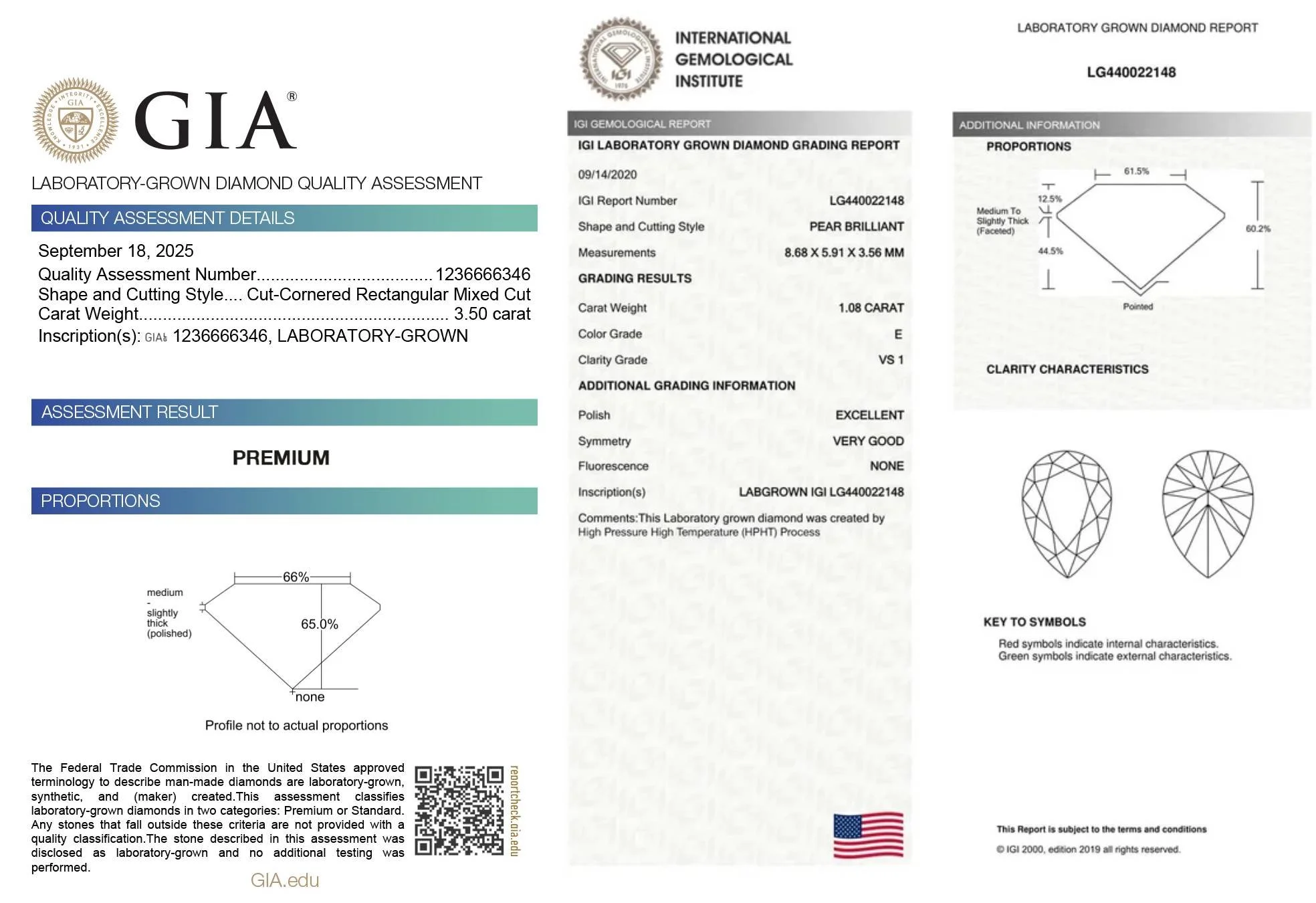
The result is a real loss of information. You lose the ability to see the fine distinctions that determine true value. For example, a D (VS1) diamond and an E (VS2) stone could both end up with the same blanket label of "Premium."
The IGI Advantage: What the 4Cs Actually Tell You
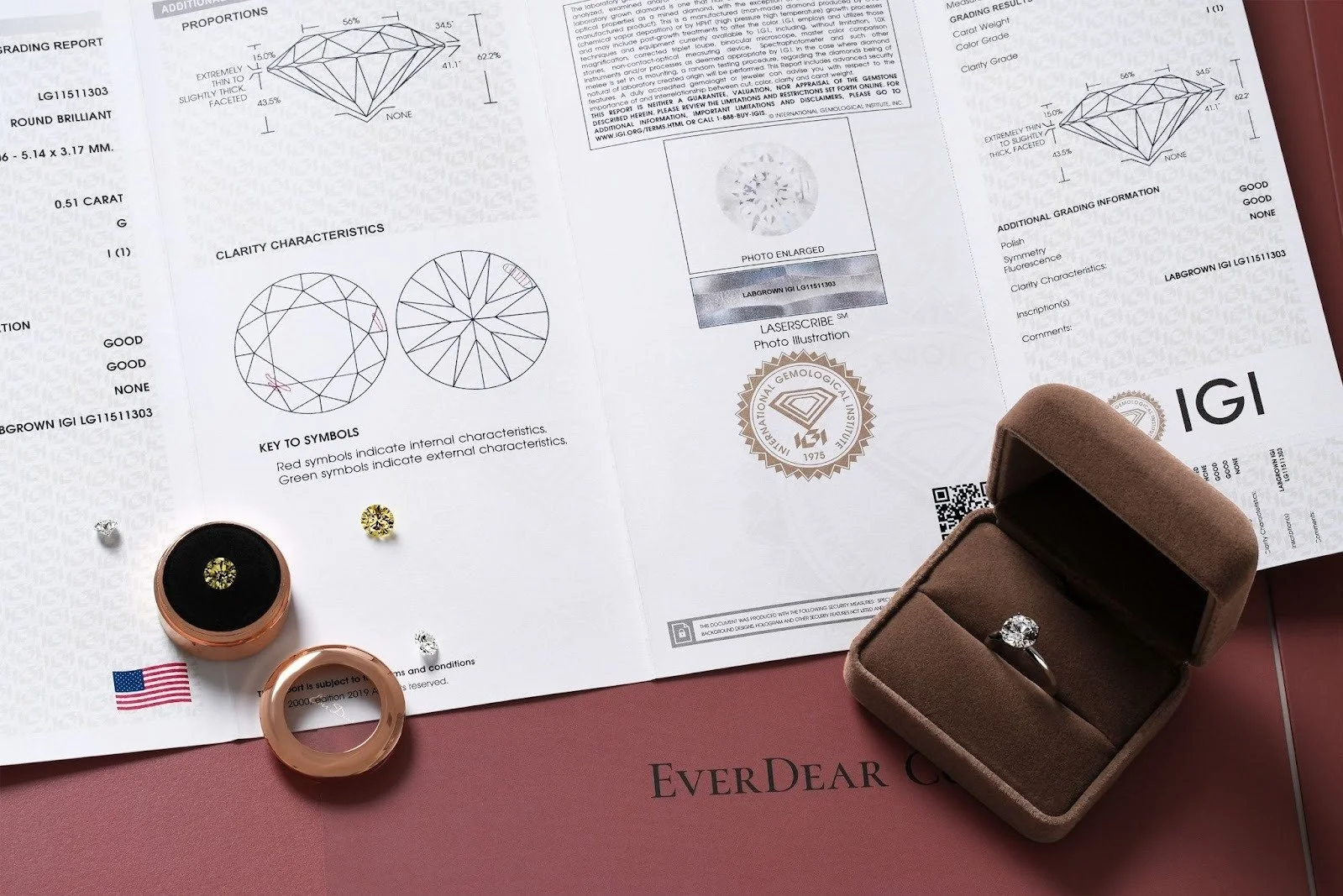
This is exactly where the International Gemological Institute (IGI) shines. IGI continues to provide full transparency through complete 4Cs grading for lab-grown diamonds, including detailed reports on polish, symmetry, and fluorescence.
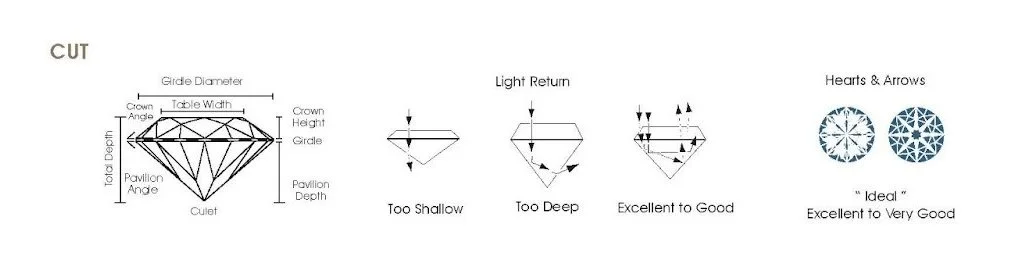
Cut: Math, Not Guesswork
IGI provides exact angles and proportions, not just an overall grade. This matters because only perfectly harmonized angles create the coveted "fire" in a diamond. With IGI data, you can verify quality markers like the "Hearts & Arrows" effect for yourself.
(IGI, 2026)
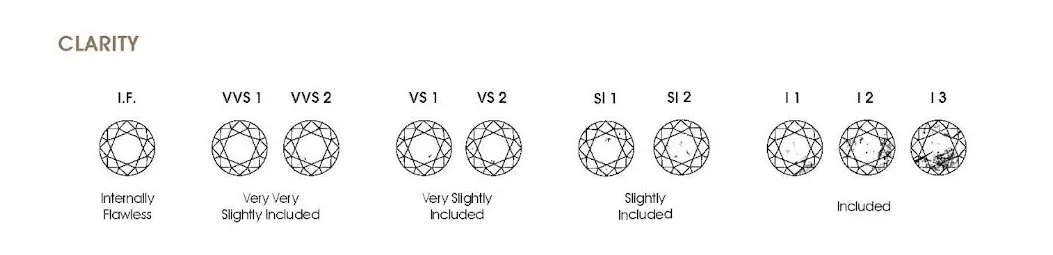
Clarity: The Roadmap of Your Diamond
IGI offers a detailed inclusion map, known as a Clarity Plot. Not every "VS1" diamond is the same, and this diagram shows you the exact position of features like feathers or crystals, helping you identify truly "eye-clean" stones.
(IGI, 2026)
Color: Precision You Can Trust
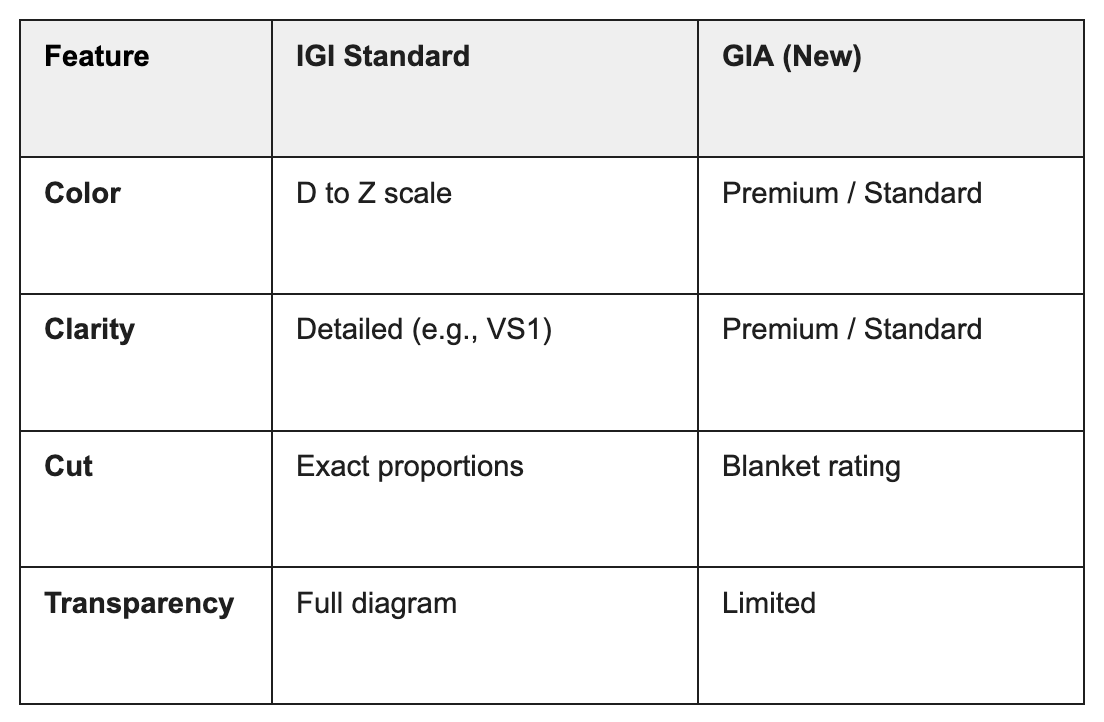
While other labs now use vague categories, IGI stays true to the precise D-to-Z scale.
The key difference: IGI continues to offer the full, precise scale, from D (absolutely colorless) to Z (tinted).
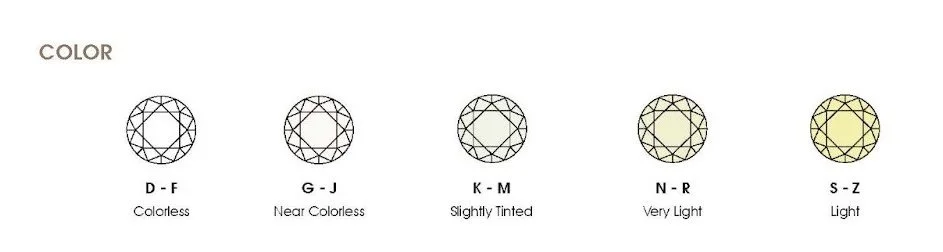
Detailed color grades instead of blanket labels: IGI shows you the exact degree of colorlessness on the internationally recognized D–Z scale. (IGI, 2026)
Why this matters: A D-color stone is rarer and more valuable than an F-color stone. But in a simplified system, both could receive the same "Premium" label. Only with IGI certification do you know exactly where your diamond falls on the color scale, so you can be sure you're paying a fair price for what you're actually getting.
Why Certification Matters
Certification gives you independent, third-party verification of your diamond's quality. It confirms that your stone is lab-grown, not natural. And it creates clear documentation for resale, insurance, and appraisal. In a market where visual differences between diamonds can be incredibly subtle, a detailed certificate is essential for your confidence and peace of mind.
For the quality-conscious buyer, the real value of IGI lies in complete transparency. Vague categories carry the risk of overpaying for average quality, while IGI's precise data helps you find the best value for your money.
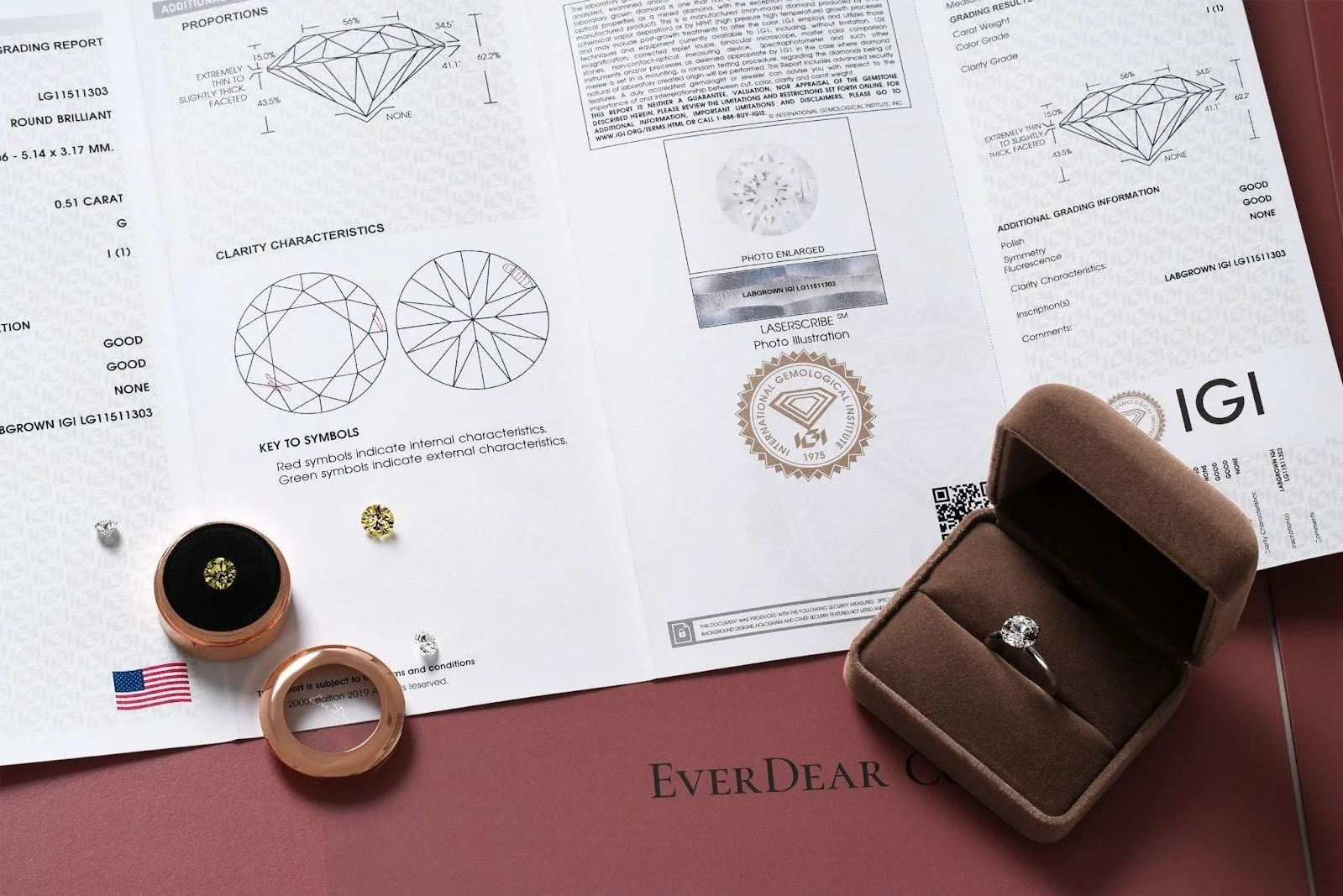
Here's an example: When comparing two visually similar diamonds, IGI's detailed cut data helps you identify exactly which stone has superior brilliance. That's real investment confidence as your budget goes toward proven quality, not opaque labels.
IGI certification is generally preferred for its detailed 4Cs grading, while GIA certification, though credible and trusted, now offers only a simplified assessment for lab-grown diamonds. At IGI, lab-grown diamonds currently make up 54% of their business, with natural diamonds at 16%.
The Bottom Line: Transparency Builds Trust
For lab-grown diamond buyers, third-party certification is a real value-add that protects your purchase and objectively evaluates your diamond's quality. While GIA remains a trusted name, IGI's detailed grading system makes it the stronger choice for lab-grown diamonds, giving you the clarity and confidence you deserve in this evolving market.