Are Cremation Diamonds a Hoax? The Science of Turning Ashes Into a Diamond Explained
By Nina H., writer at EverDear.
Key Takeaways
No, cremation diamonds are not a hoax. A lab can grow a genuine diamond using carbon, and that carbon can come from a loved one’s hair or ashes.
The honest catch: cremated ashes hold only a small amount of carbon, roughly 1 to 4 percent by weight, as carbonate in the bone mineral. It’s a small amount, but it’s enough to grow a diamond, which is the point.
The fair criticism is about the industry, not the chemistry. Because a finished diamond can't reveal its own origin, documentation is what matters, and ours is built to prove it.
Every EverDear diamond is tracked by a unique order ID from the day of purchase. It arrives with a Certificate of Authenticity, which includes an analysis of the submitted carbon and an affidavit, a signed legal statement confirming that the diamond was grown from it.
If you have searched "are cremation diamonds a hoax" or "memorial diamond scam" and landed on a few skeptical Reddit threads, that’s a reasonable place to start. You’re not being cynical by asking whether this is real. You’re being careful, and the people you love would want you to be.
So here’s the straight answer, with the science laid out clearly and the criticism taken seriously. Some of what the skeptics say is correct. This article says so, names which parts, and explains what they miss.
How is a diamond made from ashes or hair?
A diamond is carbon arranged in a particular crystal structure under heat and pressure. That’s the whole secret. A diamond doesn’t care whether its carbon spent the last few million years underground or the last few decades in a living body. If you can supply purified carbon and recreate the conditions deep inside the Earth, you can grow a diamond.
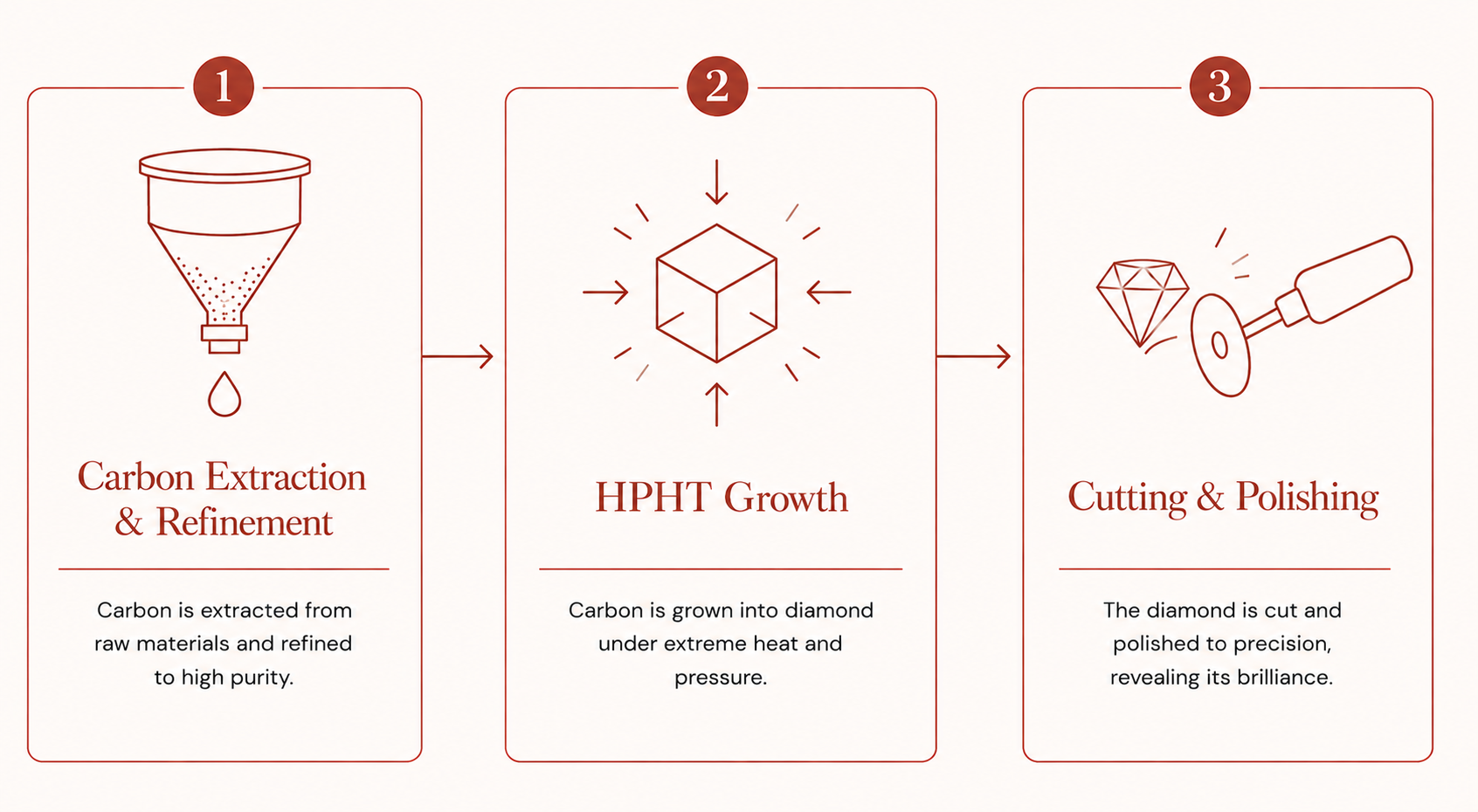
The memorial diamond process runs in three broad stages.
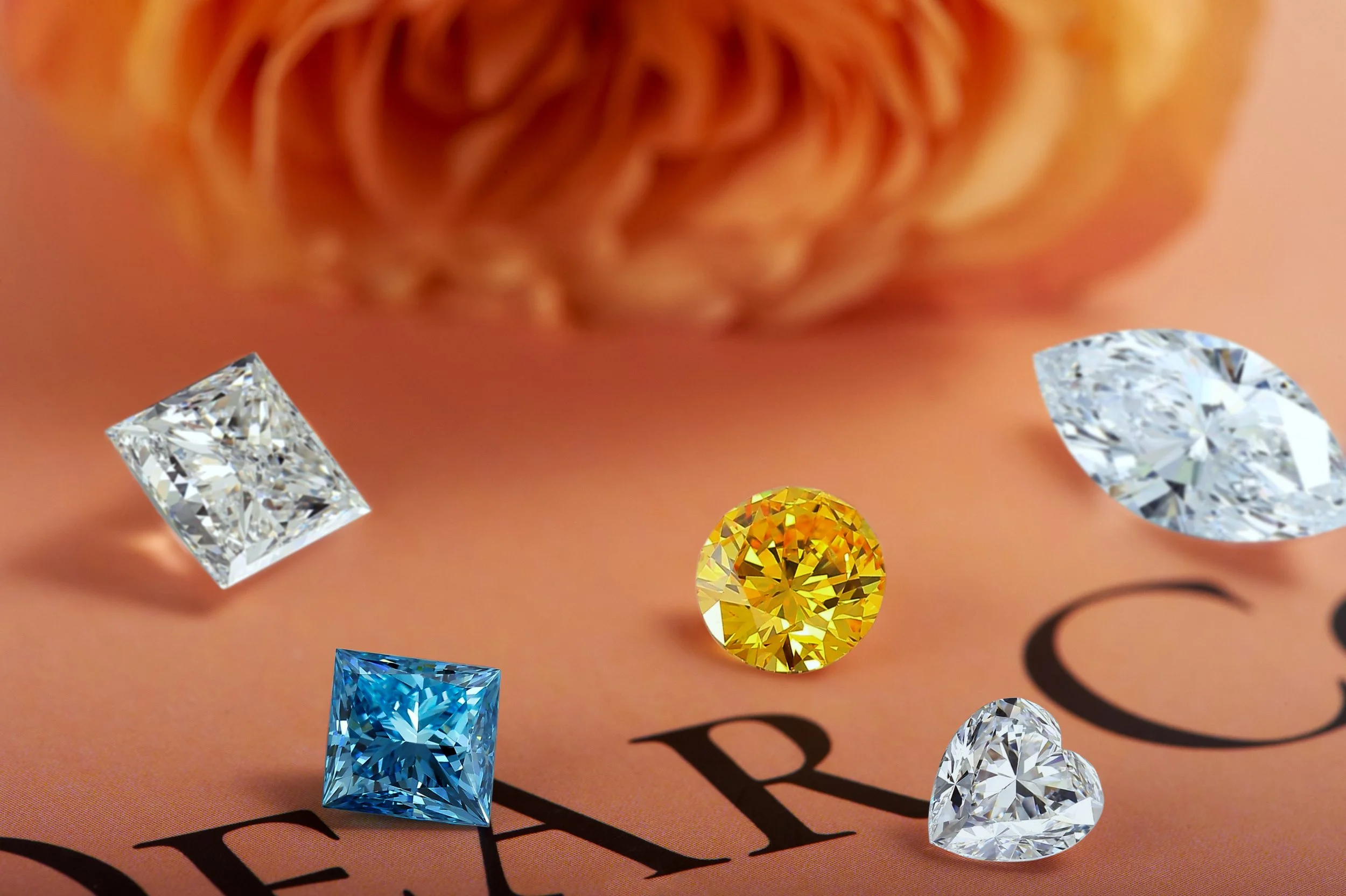
First, carbon is extracted from the ashes or hair and refined through purification, as impurities are the enemy of crystal growth. It’s also at this stage that the diamond’s color is determined. Nitrogen levels in the carbon influence hue, so the degree of purification shapes whether the finished stone is yellow, blue, or colorless.
Second, the purified carbon is placed in a press that recreates the temperature and pressure found dozens of miles below the earth’s surface, a method the industry calls HPHT, for high pressure, high temperature. The carbon crystallizes around a tiny diamond seed over weeks to months, depending on the size and color chosen.
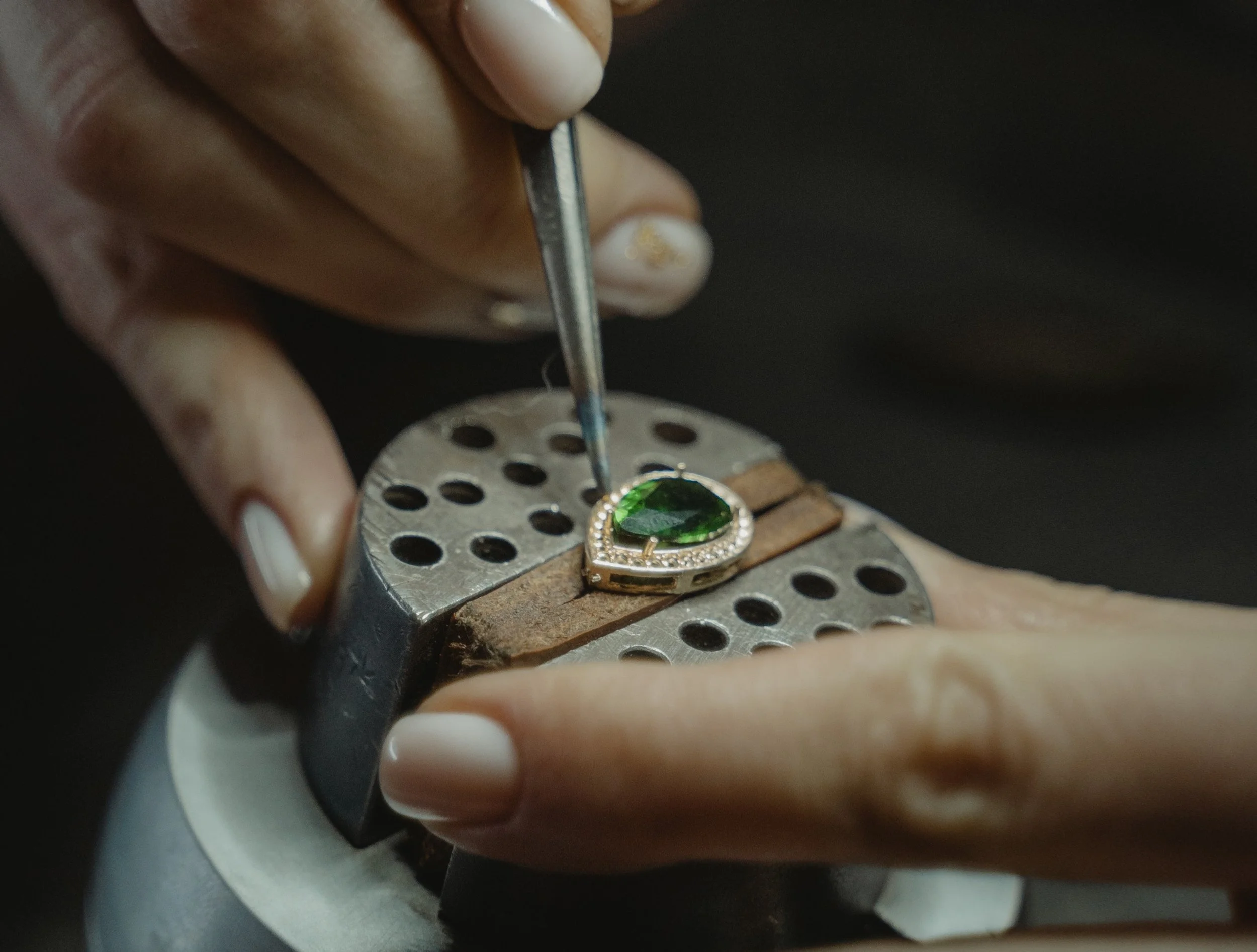
Third, the rough crystal is cut and polished by hand into a finished gem.
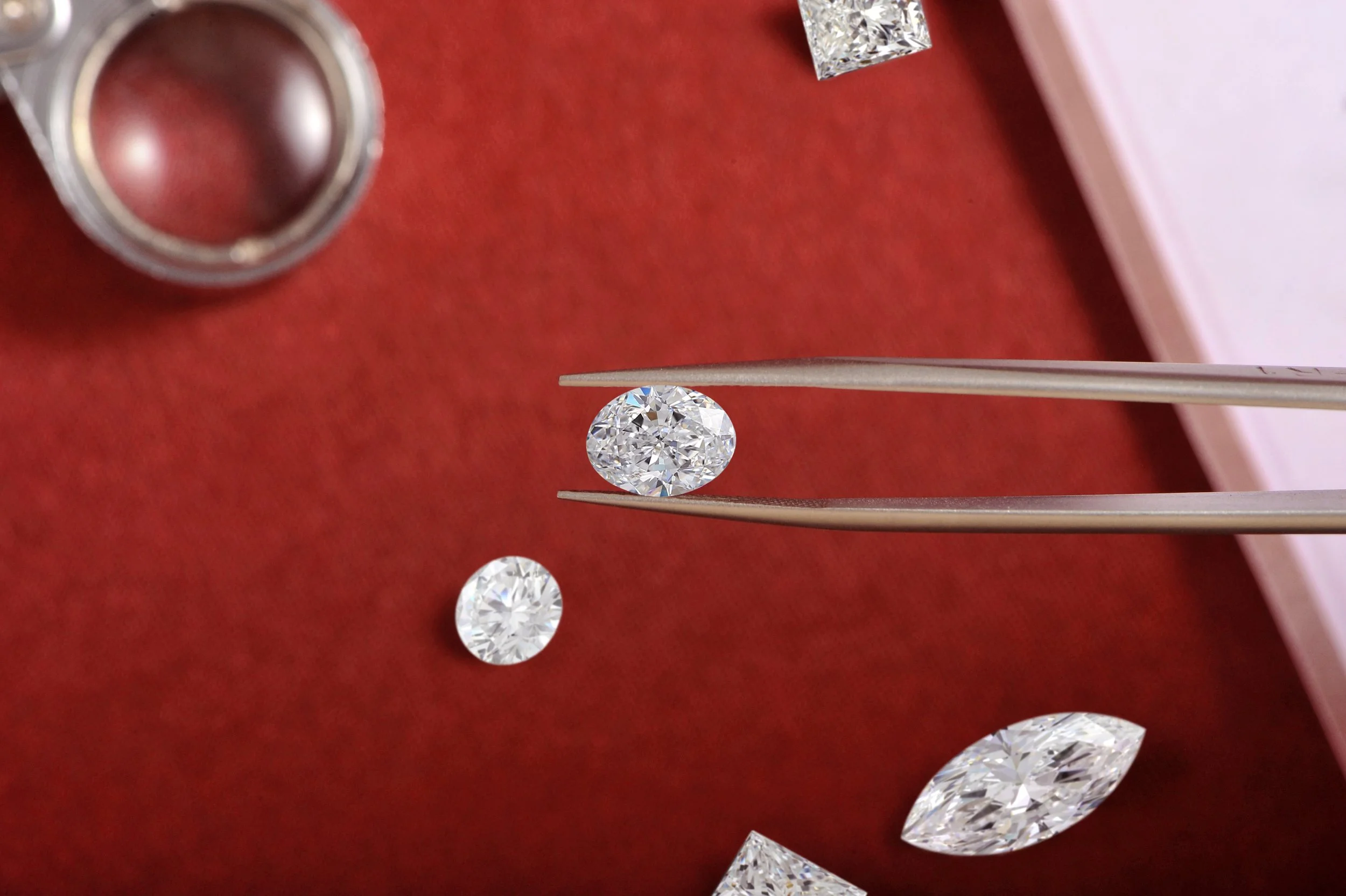
The diamond that comes out is a real diamond. It's identical to a mined stone in its chemical, physical, and optical properties. A gemologist testing it would find a genuine diamond. This is the proven science behind the lab-grown diamonds now sold in mainstream jewelry stores. Every EverDear diamond can be certified by IGI, the International Gemological Institute. The only thing that makes a cremation diamond (sometimes called a memorial diamond) different is the source of the carbon.
What do the critics get right?
This is the part most companies skip, so we don’t.
The carbon in ashes is very small
After cremation, only a small amount of carbon remains in bone. The high heat burns away the body's organic material, and what remains is mostly calcium phosphate, the mineral that gives bone its structure. The small amount of carbon left behind exists as carbonate locked inside that mineral, on the order of 1 to 4 percent by weight, with some estimates running as low as half a percent. This is not a marketing figure. It comes from the scientific literature on radiocarbon dating, a field that has specifically studied whether cremated bone retains enough carbon to measure (Radiocarbon, Cambridge University Press; Experimental Study on the Origin of Cremated Bone Apatite Carbon).
You may have seen higher numbers elsewhere, often around 18 percent. That figure describes the carbon in a living human body, before cremation. It’s not the carbon left in the ashes afterward.
Bottom line: The carbon is scarce, but a small percentage of ashes is still enough to grow a diamond. Our process is designed for exactly this amount.
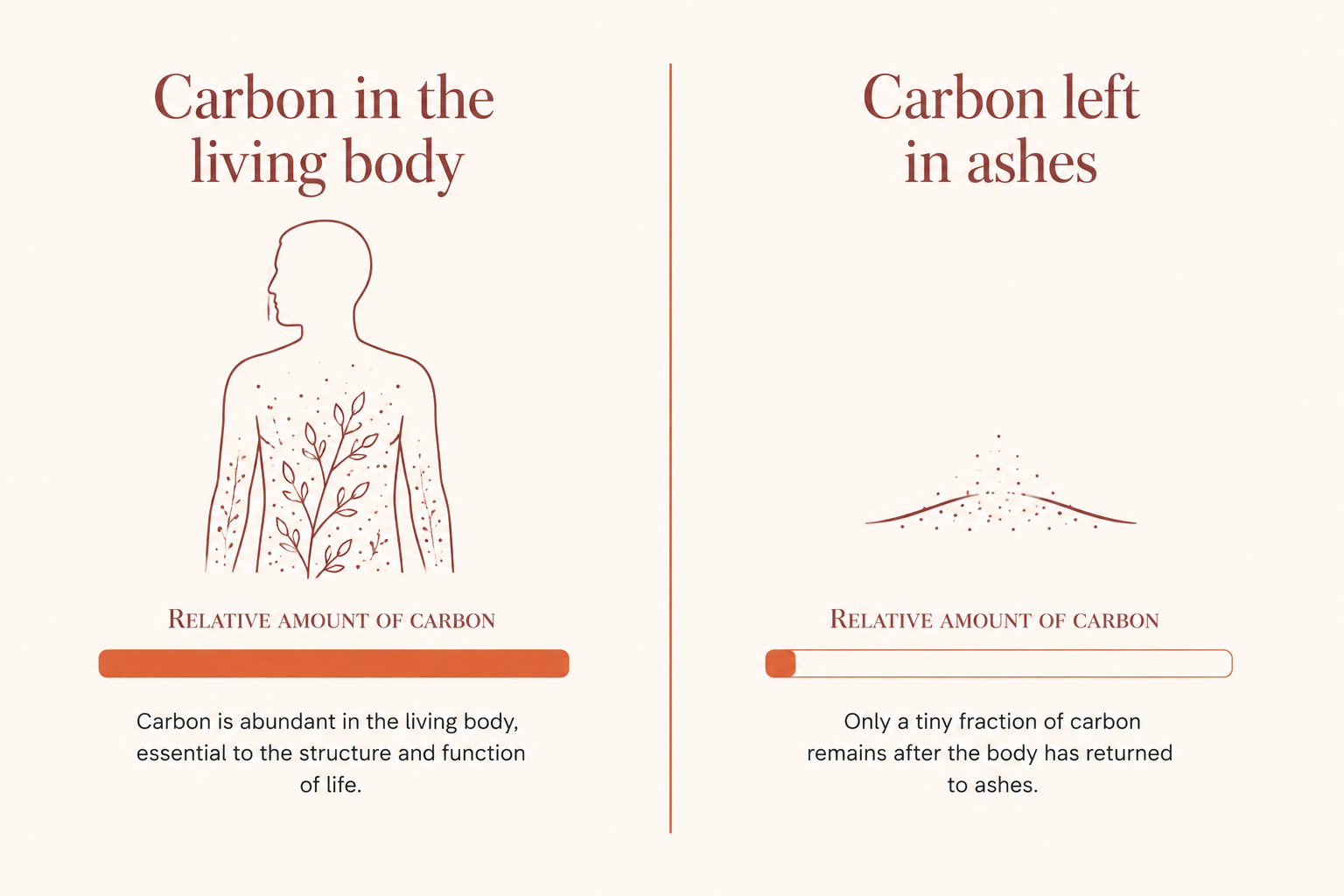
After cremation, only a small amount of carbon remains in the ashes, which is why the science is more demanding than it sounds.
Asking how a company proves it is a fair question
The industry hasn’t always made it easy to verify. Even with an honest provider, a finished diamond carries no visible mark of where its carbon came from. There is currently no test that can tell whether a finished diamond began as a loved one's carbon or as ordinary graphite, a point made plainly in a thoughtful analysis by McGill University’s Office for Science and Society.
That connection lives in the documented path the carbon traveled, which is why the documentation matters so much, and every family should feel comfortable asking any provider for that documentation before committing.
Bottom line: The right response to industry dishonesty is to demand documentation, not to doubt the science.
Science cannot find a person in an atom
This is the deepest concession. A finished diamond carries no genetic record, no biological signature that science can read and say: this belonged to this person. We won’t claim otherwise.
What it does carry is a documented history. This stone, and no other, was grown from carbon that came from someone you love, and the next section shows how we document that, step by step.
Think of a memorial tree. The oak that grows from a loved one's ashes carries no DNA, no biological trace a scientist could identify. What makes it meaningful is knowing it was nourished by them, that its roots drew from the same ground where their carbon returned. A memorial diamond works the same way. The meaning was never in the chemistry. It was always in the story you know.
Bottom line: Science was never the right tool for this question. A wedding ring is just gold until you know whose it was. This stone is no different.
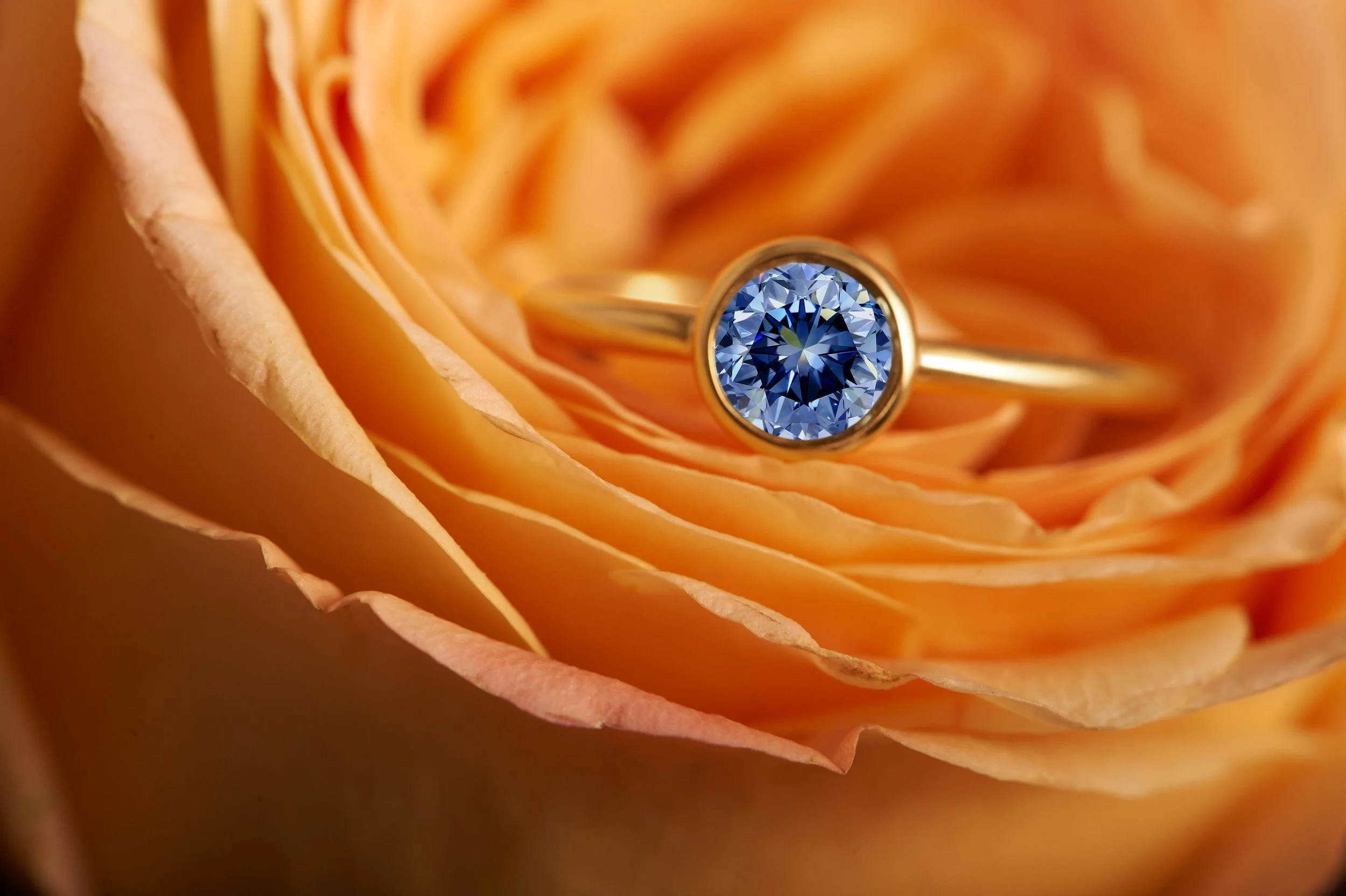
Not a chemical signature, but a life remembered.
What do the critics get wrong, or oversimplify?
The science holds up. The leap some skeptics make is from "ashes contain little carbon" to "therefore it’s impossible," and that leap is wrong.
Little carbon is not no carbon. A typical order works with around 50 to 100 grams of ashes, and even a small percentage of carbon across that quantity is workable for a process designed around exactly this constraint. The low carbon content makes the work harder and the purification more demanding. It does not make it fiction.
The second oversimplification is "it’s just a lab diamond." That framing treats "lab-grown" as a synonym for "fake," which it is not. As the science above shows, the stone is a genuine diamond by every physical measure. The relevant question was never whether it's real. It's what the carbon came from.
The "scam" label deserves a careful response. The existence of dishonest sellers is an argument for transparency and standards, not an argument against the underlying science. The right reaction to "some companies cut corners" is to ask a company how it proves it does not, and that’s a conversation we welcome.
Ashes or hair: what's the difference?
Both ashes and hair work, and a diamond grown from either is equally real and equally your loved one's. The actual difference is practical: hair simply contains more carbon by weight, so it’s a little easier to work with. Many families come to us with ashes, and that's what we work with most.
Hair is made largely of keratin, a protein rich in carbon. A lock of hair is also something many families can gather without involving cremation at all, which matters for people creating a diamond from a living loved one or a living pet.
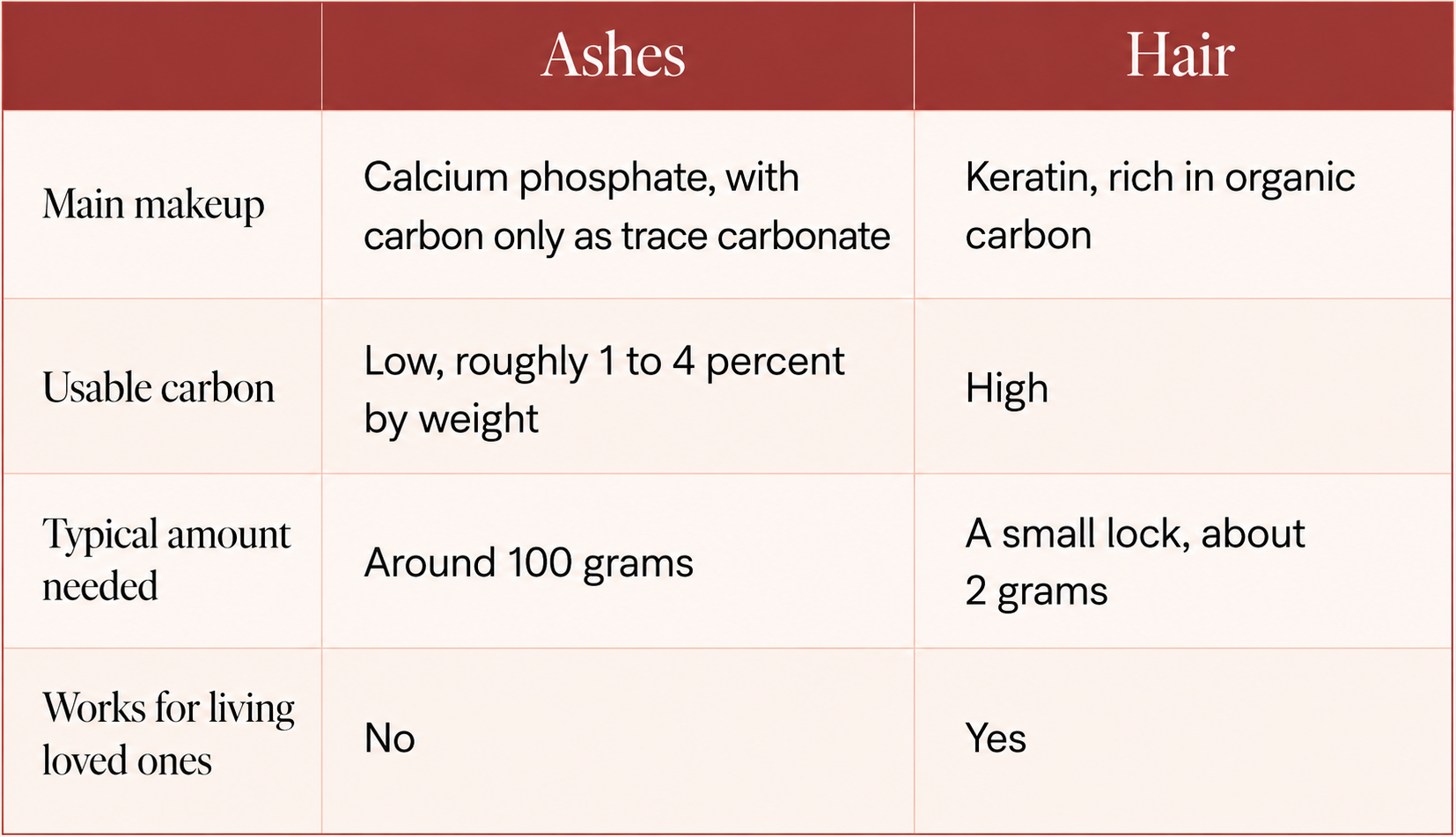
We can work from either source. When a family has a choice between the two, hair can make the process a little more straightforward, but ashes are a complete and trusted source on their own. Our team will talk through what each option means for a particular situation without steering toward a single answer. Book a free consultation.
How EverDear proves your diamond comes from your loved one
The most common fear isn't that the diamond is fake. It's that it isn't yours. That somewhere in a long process, someone swapped or diluted the carbon, and the stone you're holding has no real connection to the person you lost. That fear is legitimate. The industry has given people reasons to have it.
Our view is simple: a company asking families for this much trust owes them a direct answer to every hard question, in writing, before any money changes hands.
Here is how we deliver on that.
A record that starts before anything leaves home
Every order is assigned its own unique identifier the day it's placed. By the time a family's ashes or hair arrive at the facility, a record is already waiting with that identifier attached, and it follows the material through every step that comes after.
This is also what makes substitution structurally difficult: for ordinary carbon to enter the process, someone would have to deliberately introduce unlabeled material into a system where every gram is received, recorded, and tracked under one family's identifier from the moment it arrives. The record is not only a tracking tool, but also the mechanism that closes the door on substitution.
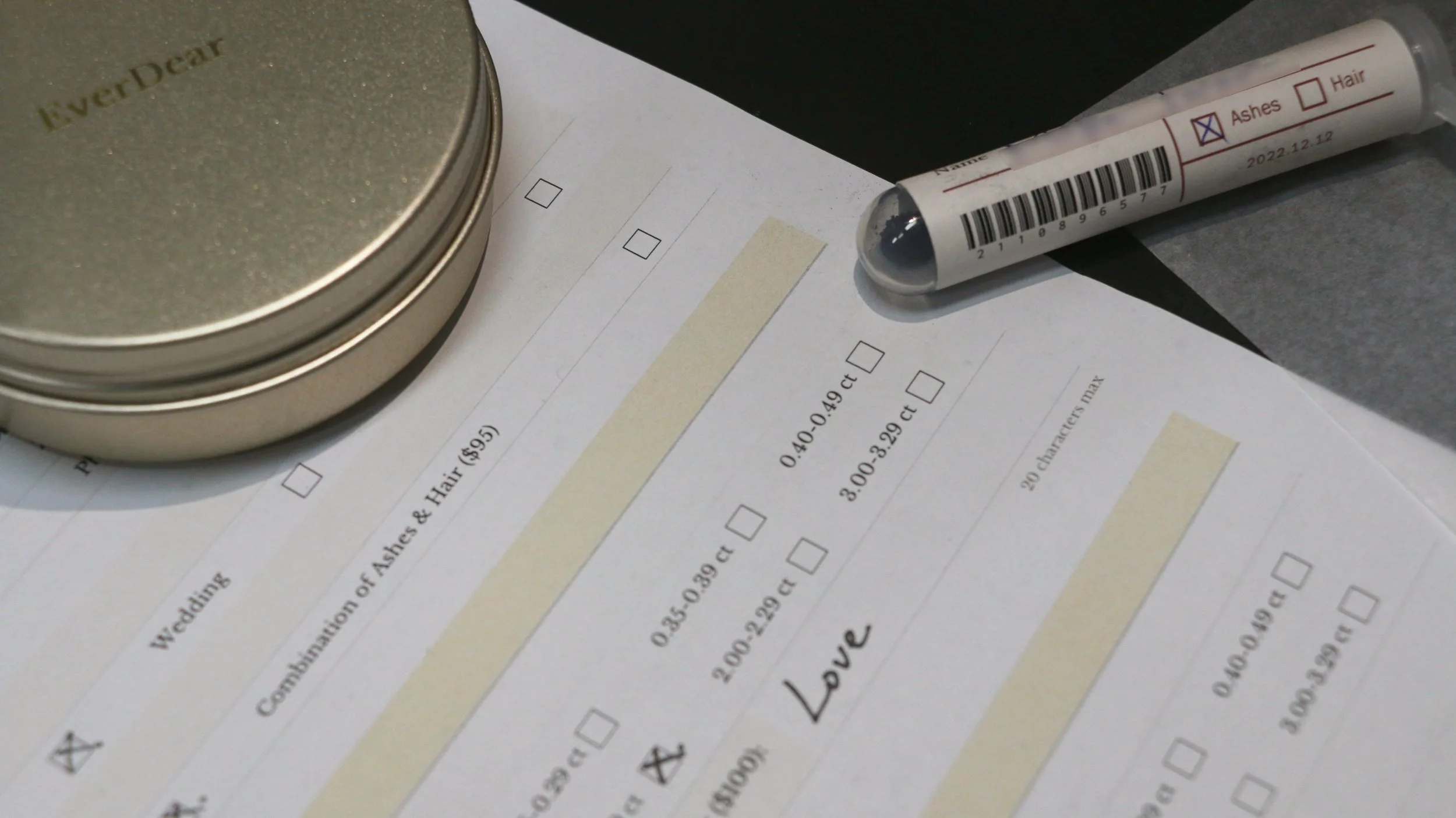
Every EverDear order begins with a name, a record, and a labeled container, before anything else starts.
Physical controls at every stage
Inside the lab, orders are kept strictly apart. One family’s carbon is never processed alongside another’s. Every surface and tool that contacts the material is sterilized before the next order begins. Separation isn't a policy that gets followed when convenient. It's how the lab is structured.
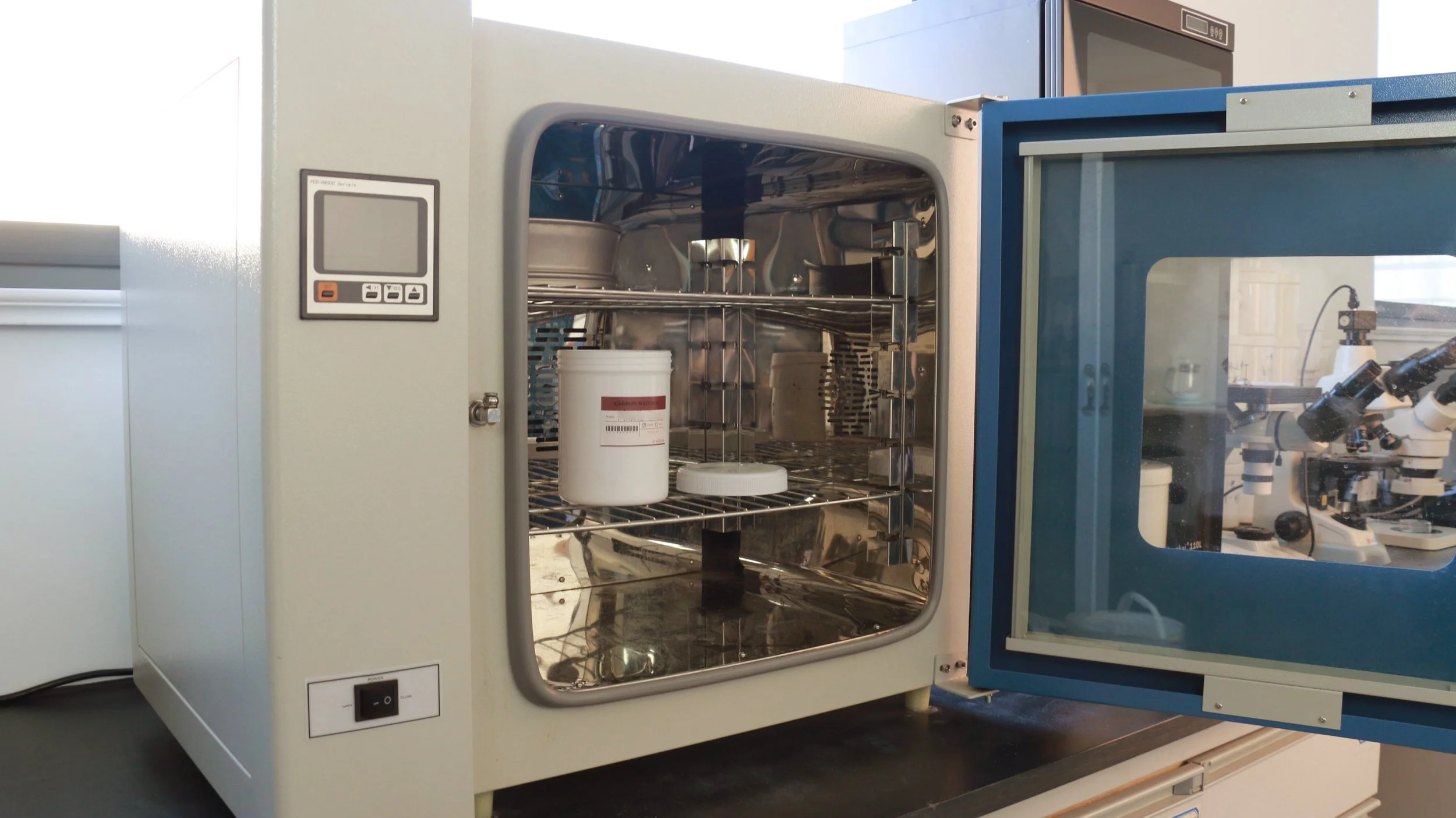
Each order is handled on its own, from the moment it arrives at the EverDear lab.
Documentation that ends in the family's hands
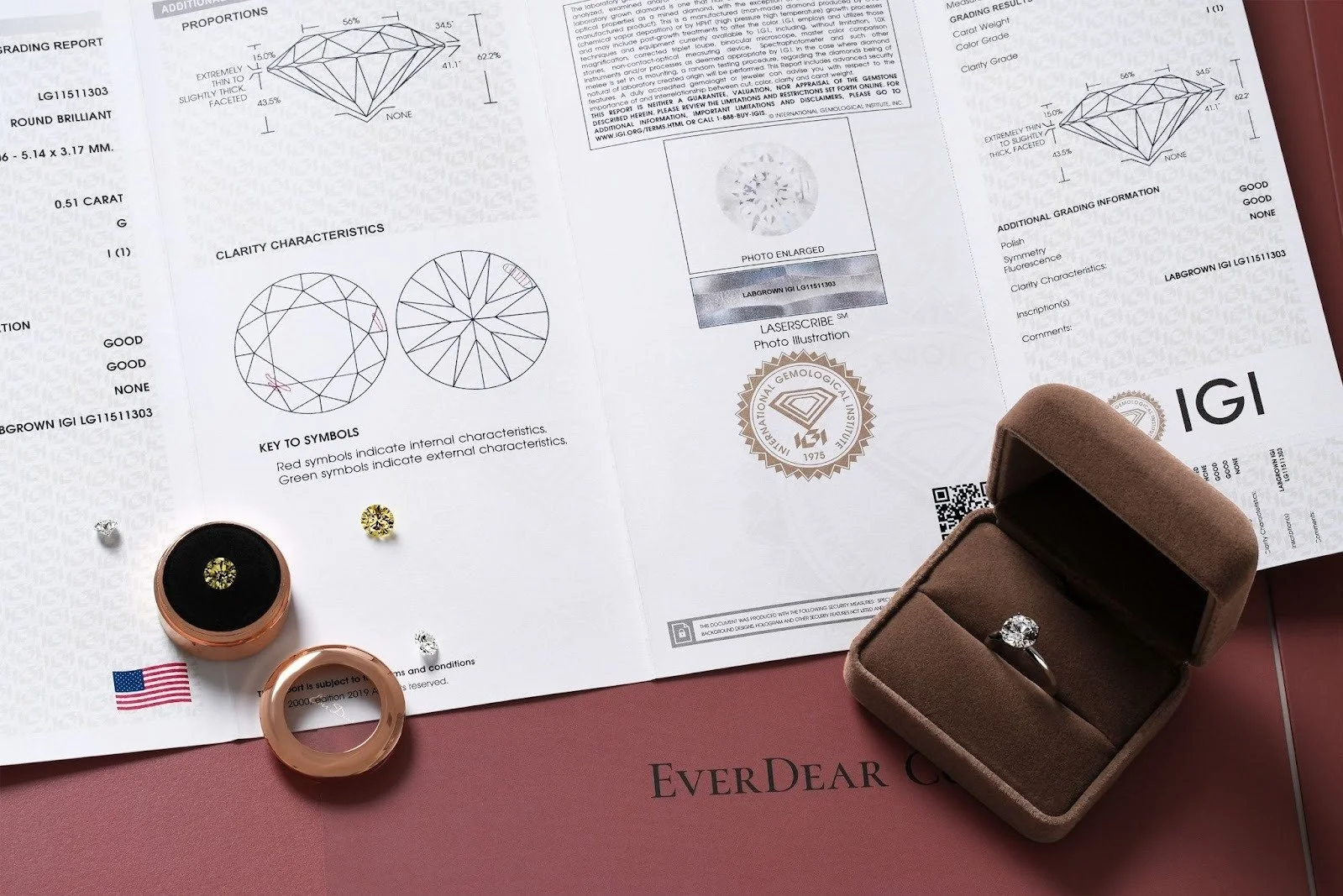
Alongside the finished diamond, we provide a Certificate of Authenticity containing two things: an analysis of the carbon the family submitted, and a sworn affidavit that this diamond was grown from that carbon and no other. A sworn affidavit is a signed legal statement. If the claim is false, we are legally accountable for it. That's not just a promise. It's a liability. The analysis documents what entered the process, and the affidavit is what we sign our name to about what happened after.
Families can also have their diamond independently certified by IGI, the institute that grades diamonds for the wider jewelry industry. IGI confirms what the stone is: a genuine diamond of a graded cut, color, and clarity. Our certificate traces the origin of its carbon. The two documents answer different questions, and together they cover both.
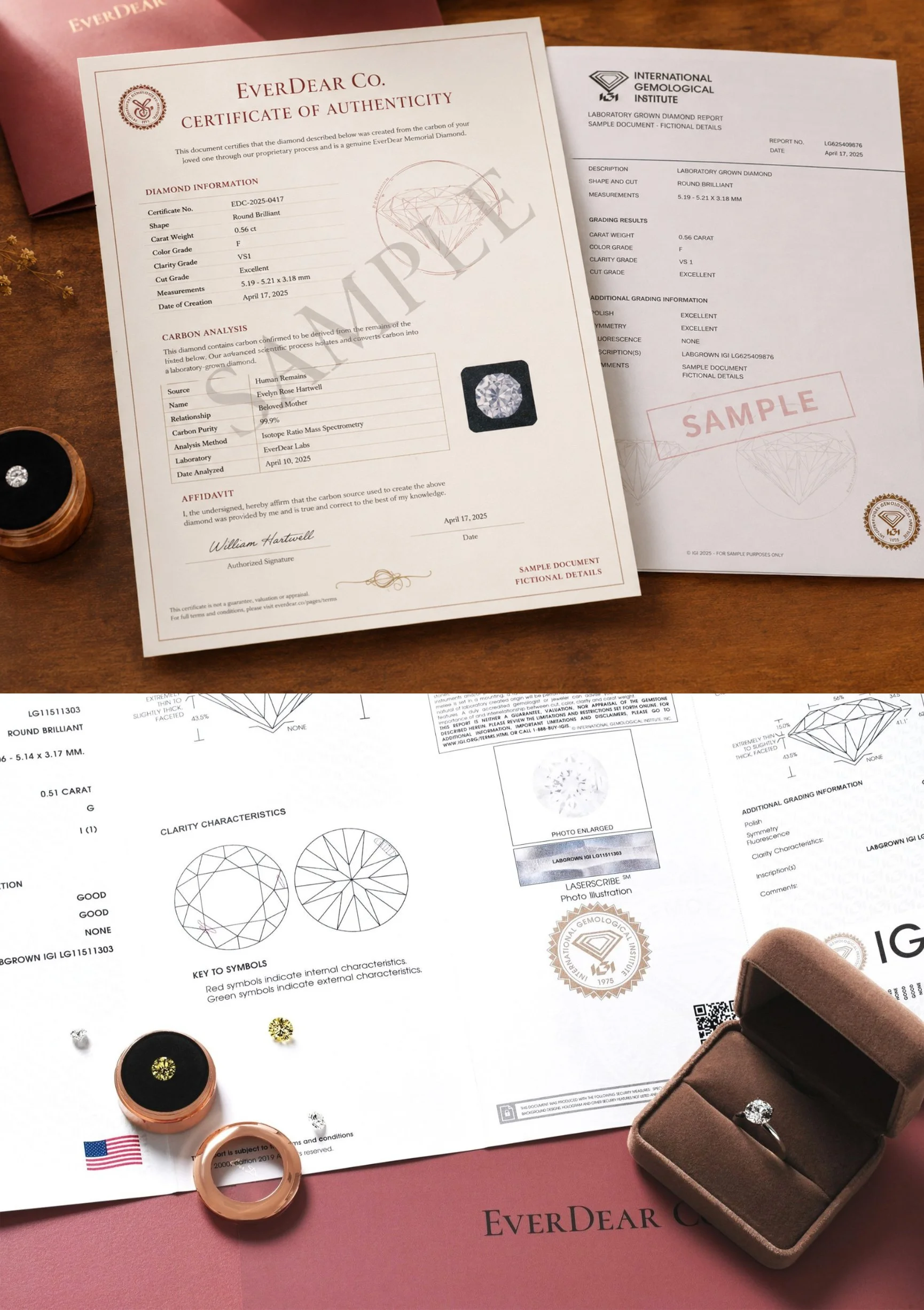
EverDear's Certificate of Authenticity and IGI report
Tested by an independent laboratory
Everything above is our own record-keeping, and we know that's a fair thing to be skeptical of. So we commissioned an outside laboratory to test it.
In August 2026, we sent cremated remains to SGS Beta, an ISO/IEC 17025-accredited testing laboratory in Miami, for carbon-14 analysis under the ASTM D6866 standard. The test tells once-living carbon apart from fossil carbon like graphite. Fossil graphite measures 0 percent biogenic. Our samples came back between 90 and 100 percent biogenic.
All three reports are published here in full, exactly as the laboratory issued them. Each carries a QR code and the reference numbers SGS Beta needs to confirm the report is genuine, so the result can be checked with the lab rather than taken from us.
Report Beta-837809, 100% biogenic carbon
Report Beta-837808, 97% biogenic carbon
Report Beta-837810, 90% biogenic carbon
That result speaks to the accusation at the heart of the "hoax" question: that a company might quietly grow your diamond from ordinary graphite. What it confirms is that the carbon we start with is biological, not industrial, and that confirmation comes from a laboratory with no stake in the answer.
No test of a finished stone can reveal its origin. That's why the proof comes in two parts: an independent lab confirming what goes into the process, and a documented chain carrying it through every step to the finished gem, with our name on it in writing.
Questions families ask EverDear
-
For most cremation diamond sizes, around 50 to 100 grams of ashes or 1 to 2 grams of hair, about a small lock, is enough. Larger diamonds can call for a little more, since purification and growth need extra material to work with. We confirm the exact amount for each order, and you don’t have to send everything you have.
-
Once the ashes or hair arrive, the full process of carbon extraction, growth, and cutting and polishing usually runs 7 to 12 months, most often landing around 11. Bigger stones and some colors, pink among them, need a longer growth cycle, and we let each diamond take the time it needs.
-
Not by looking at the finished stone, and we won’t pretend otherwise. What you can rely on is the documentation: an identifier that tracks the remains from the day of the order, strict separation between orders in the lab, and a certificate pairing an analysis of the submitted carbon with a sworn statement that the diamond was grown from it.
-
Yes. A memorial diamond is chemically and physically identical to a mined diamond, grown from carbon in a lab, not dug from the ground, and every EverDear diamond can be independently certified by IGI.
-
The simplest protection is to send only what is needed, and we confirm that amount with each family before anything ships, so most of a loved one’s remains never leave home at all. If any submitted material is left over after the process, families can ask for it to be returned, and we’ll send it back.
What we believe
Skepticism, here, is a form of love. When someone asks hard questions before entrusting a piece of someone they love, a person or a pet, here or remembered, to a company they have never met, they are protecting that bond, and a trustworthy company should welcome the questions rather than deflect them.
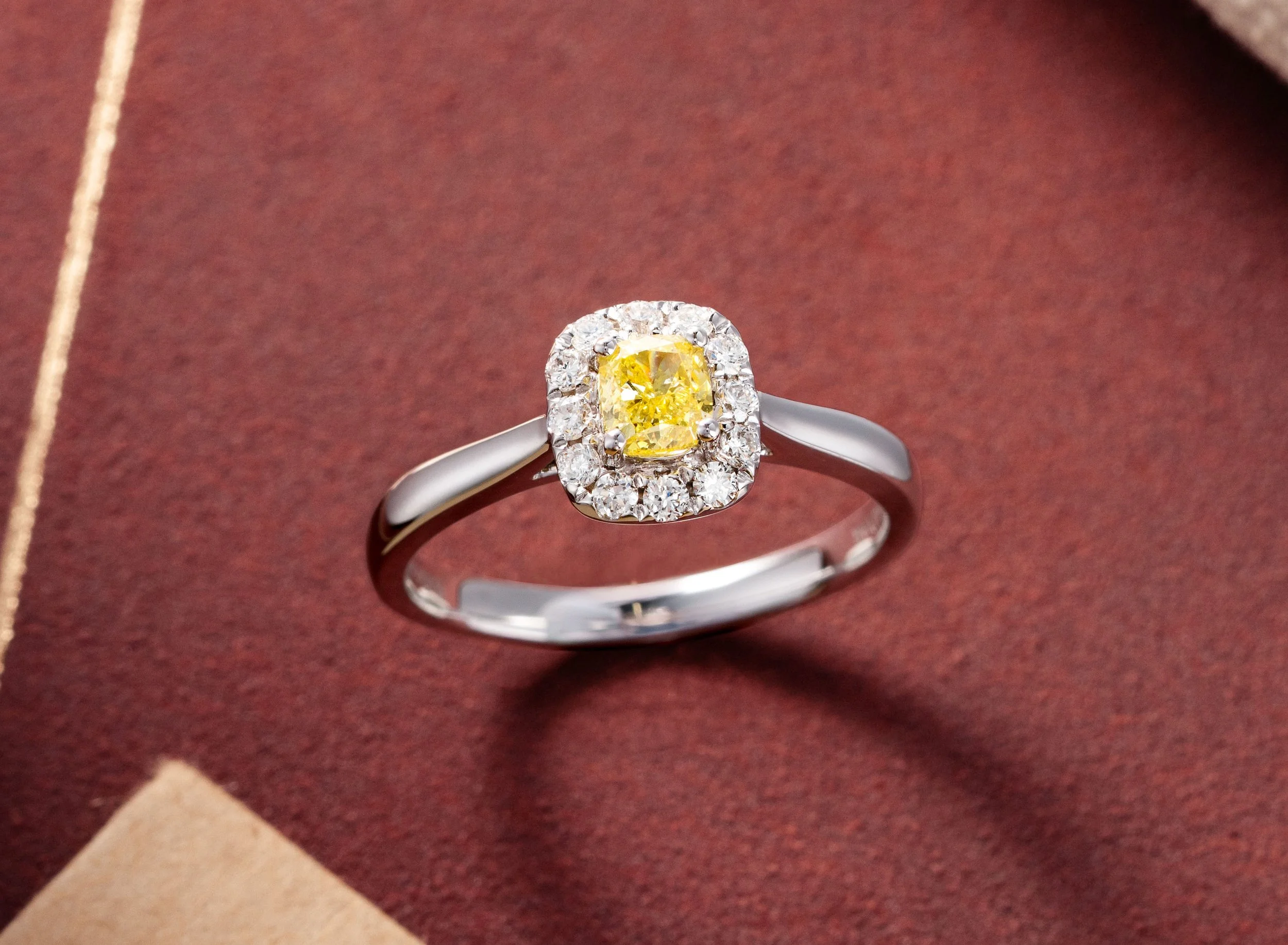
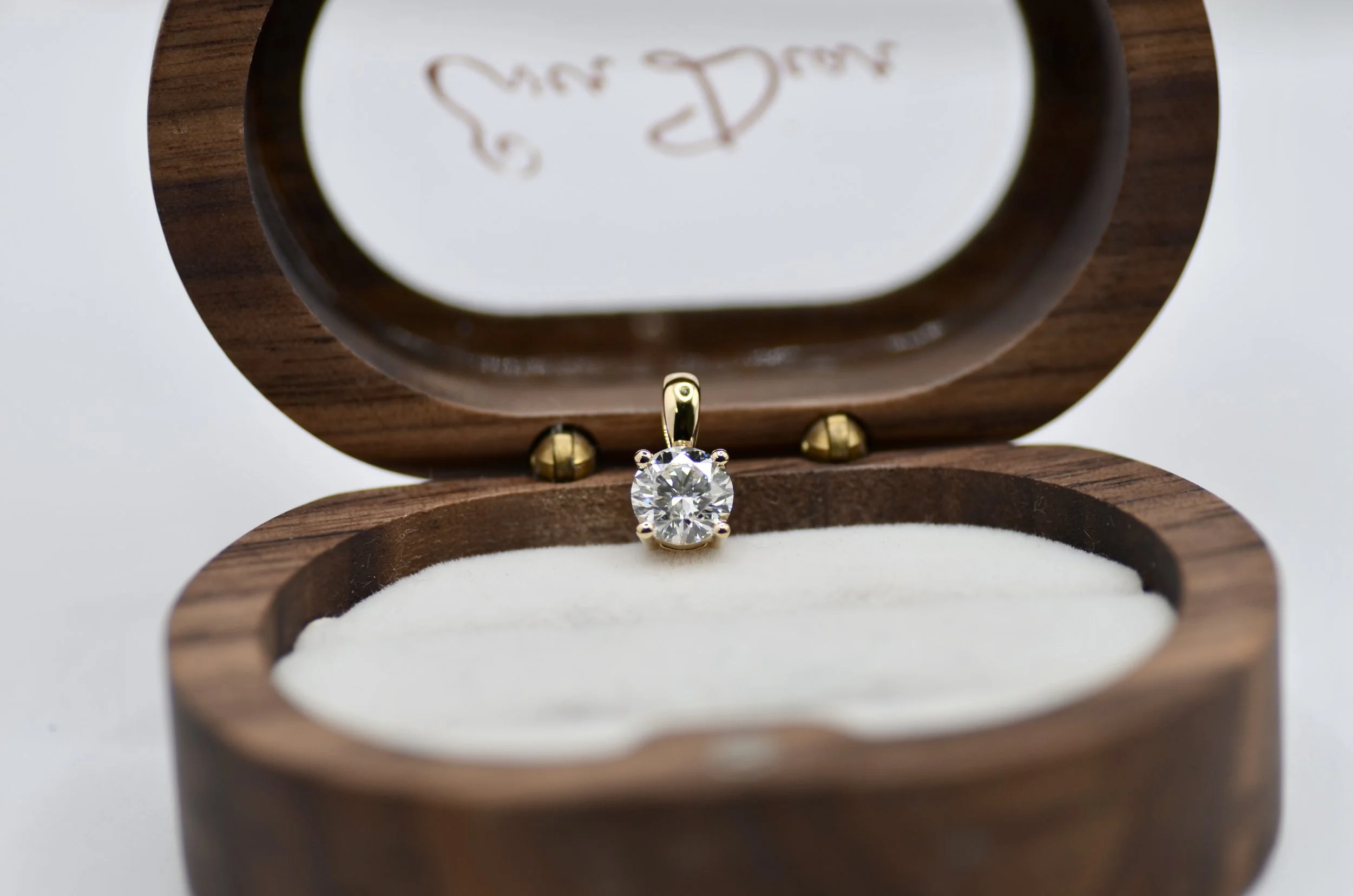
The science of memorial diamonds is real, and the meaning is something science was never meant to measure. A diamond grown from a loved one’s carbon will not register differently on any instrument. It registers differently in the hand of the person who knows where it came from. That is not a flaw in the idea. It is the idea.
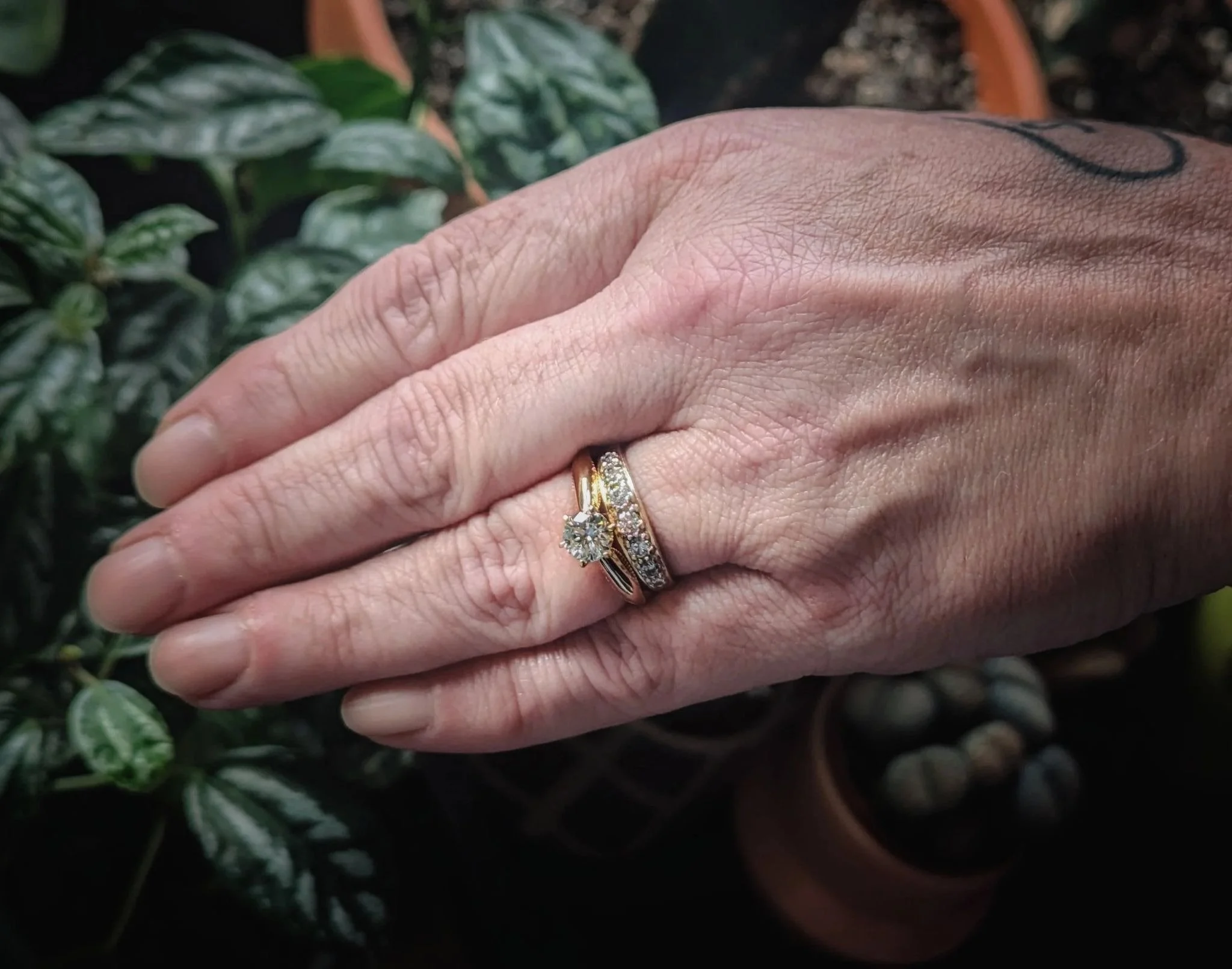
Worn every day, kept close.
The industry around this science is still earning its trust, one honest answer at a time. We’d rather be the company that tells you what the critics get right than the one that hopes you never ask. This isn't a decision to make quickly, and we won't ask you to. You can start here when it feels right.