By Nina H., writer at EverDear.
It sounds hard to believe, but every part of this story is true.
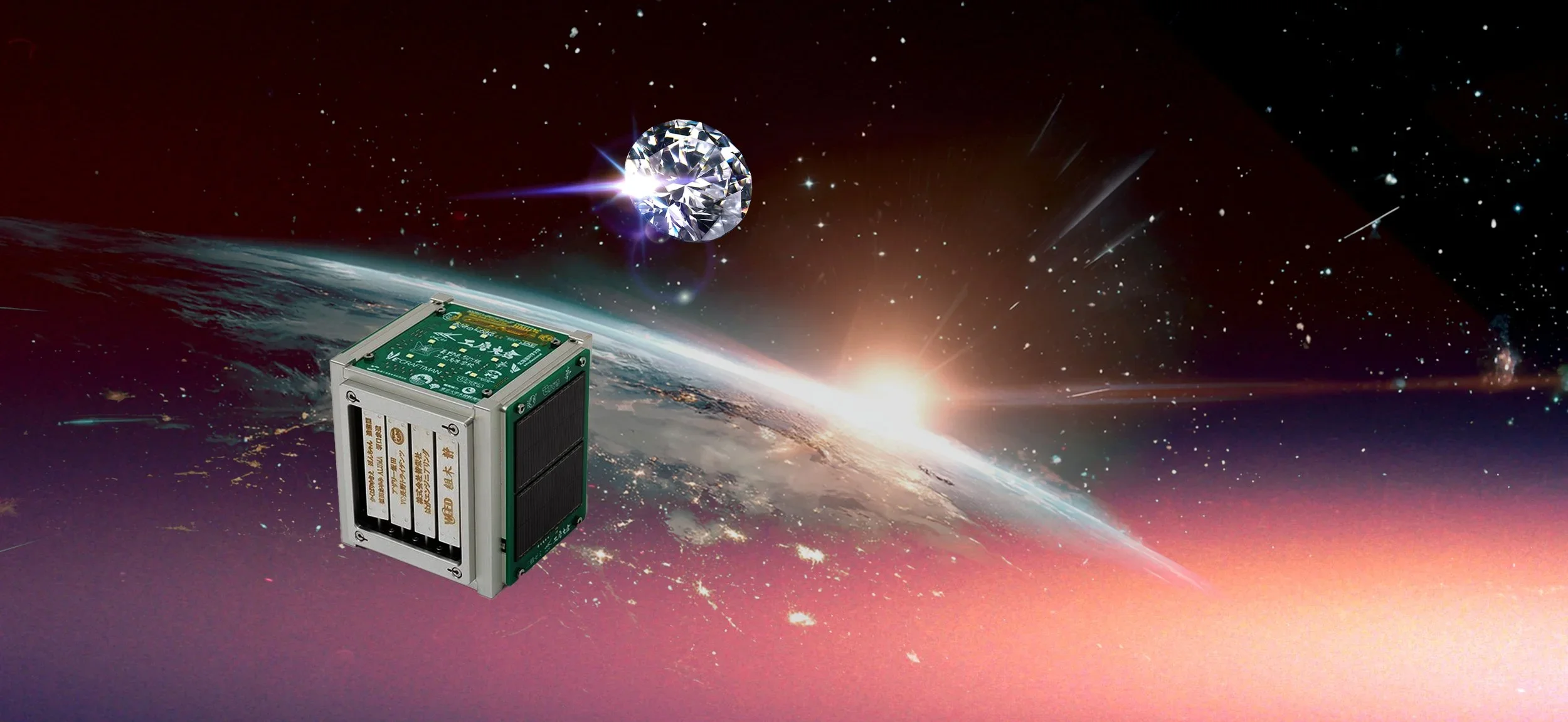
A diamond, grown from the hair of a family and the fur of a beloved Shiba Inu, has been circling the Earth since February, and in the coming weeks it's expected to fall back through the atmosphere as a shooting star.
It rides aboard a tiny satellite no bigger than a 10-centimeter cube, built largely by the hands of students. And it got there because one man spent three years steadily working to make an impossible-sounding dream come true: a space journey with his family.
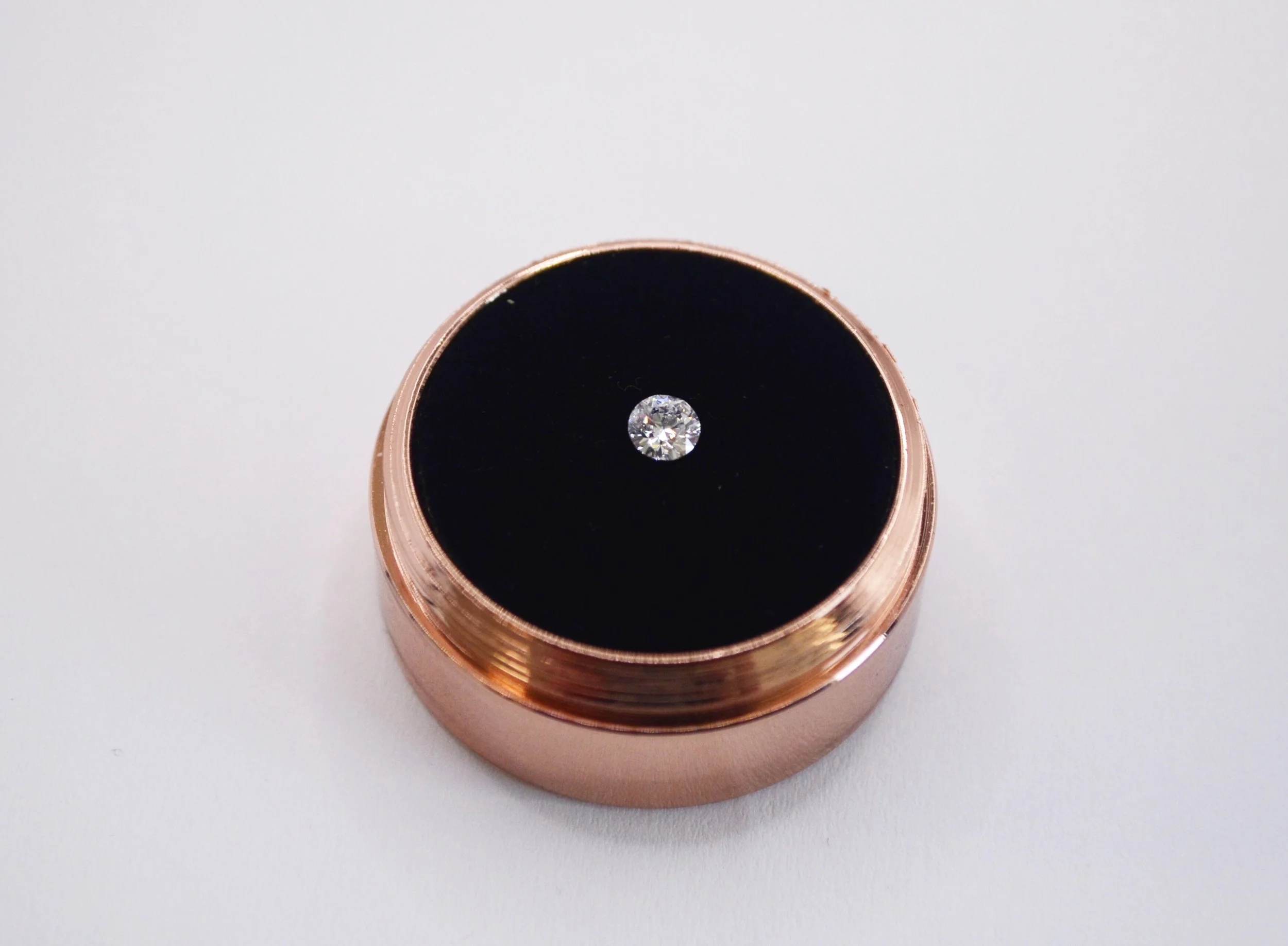
The EverDear memorial diamond created from Professor Mitsuhashi's family's hair and his Shiba Inu's fur, before its journey to space
The Man Behind the Dream
Professor Ryuichi Mitsuhashi teaches electrical and electronic engineering at Hokkaido University of Science in Sapporo, Japan. But his passion has always reached a little higher than the classroom. He's spent over three decades helping students build things that actually go to space.
He was part of the development team behind HIT-SAT, Hokkaido's first satellite, launched in 2006. He serves as a director of UNISEC (University Space Engineering Consortium), which supports student-led space projects in Japan and around the world, and as vice chairman of HASTIC (Hokkaido Aerospace Science and Technology Incubation Center), which promotes space science and innovation from Hokkaido.
In short, he's someone who has spent his career making space feel possible for the people around him.
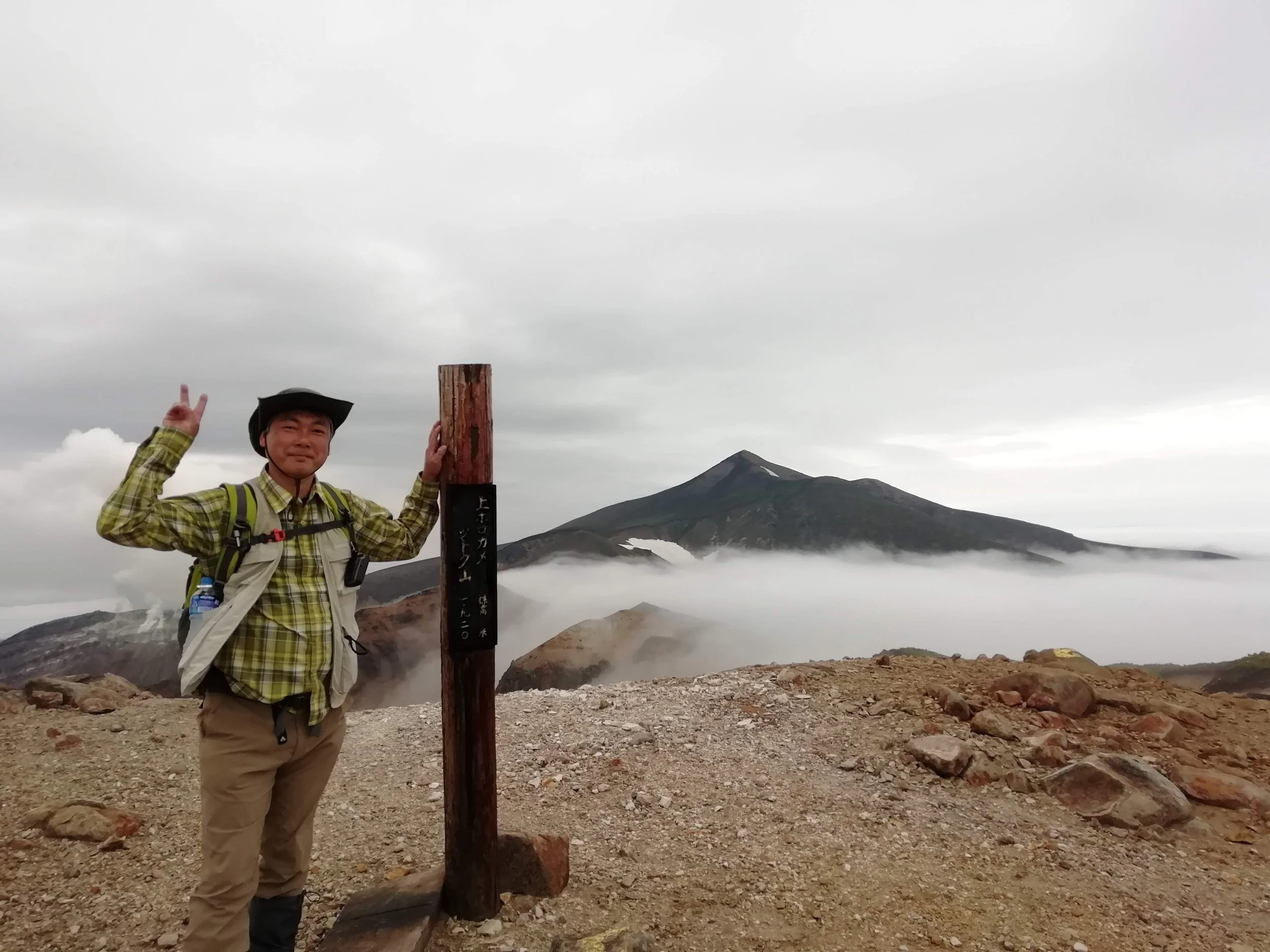
Professor Ryuichi Mitsuhashi
But this particular dream was personal.
In 2023, Professor Mitsuhashi reached out to EverDear with a request no one had ever made to us before: "I would like to mount a lab-grown diamond made from hair onto a satellite. Could you help with it?"
What followed was three years of steady work between a professor in Hokkaido and our team in Santa Clarita, California. Together, we worked toward something that had never been done.
What Is a Memorial Diamond?
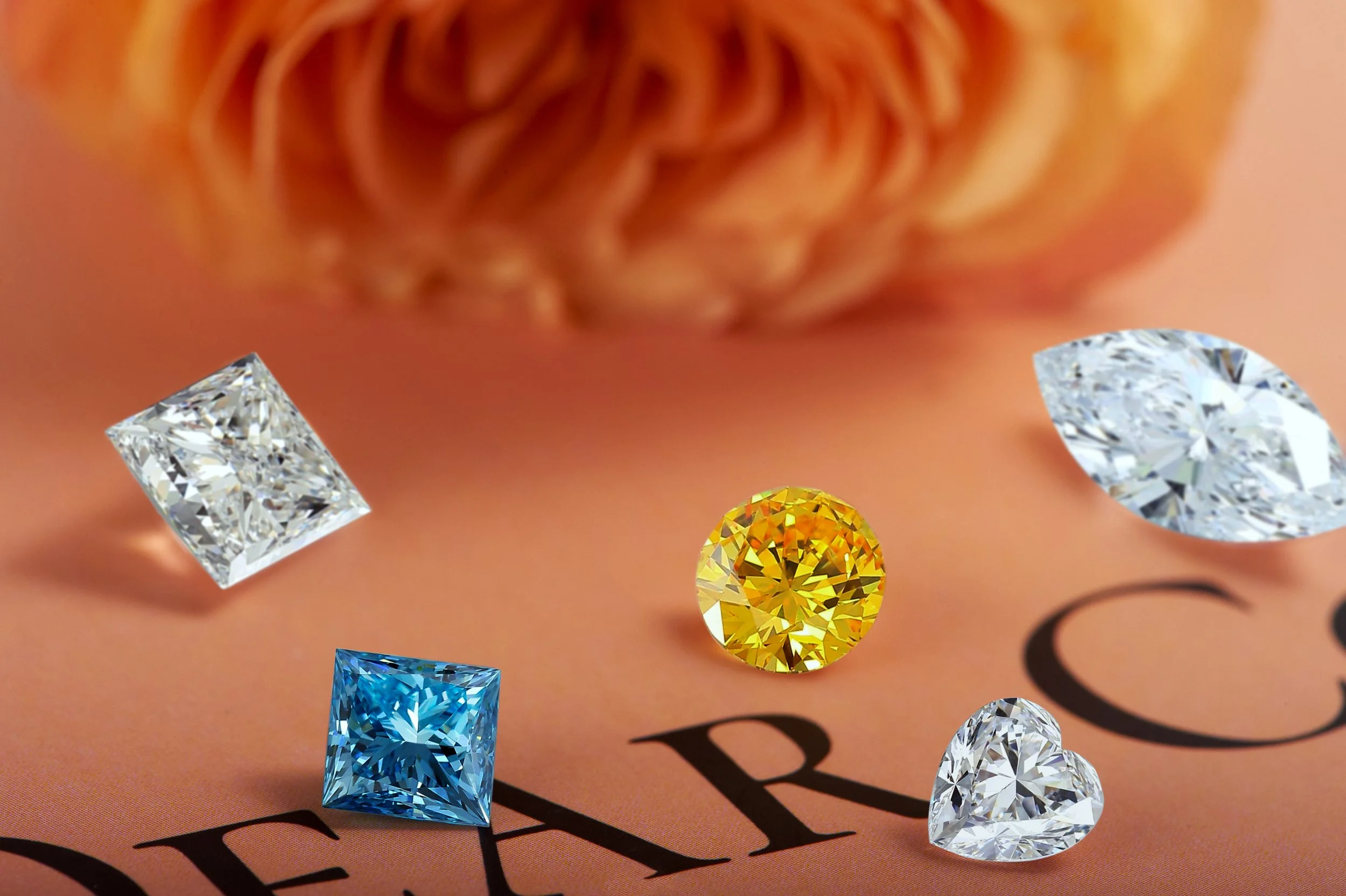
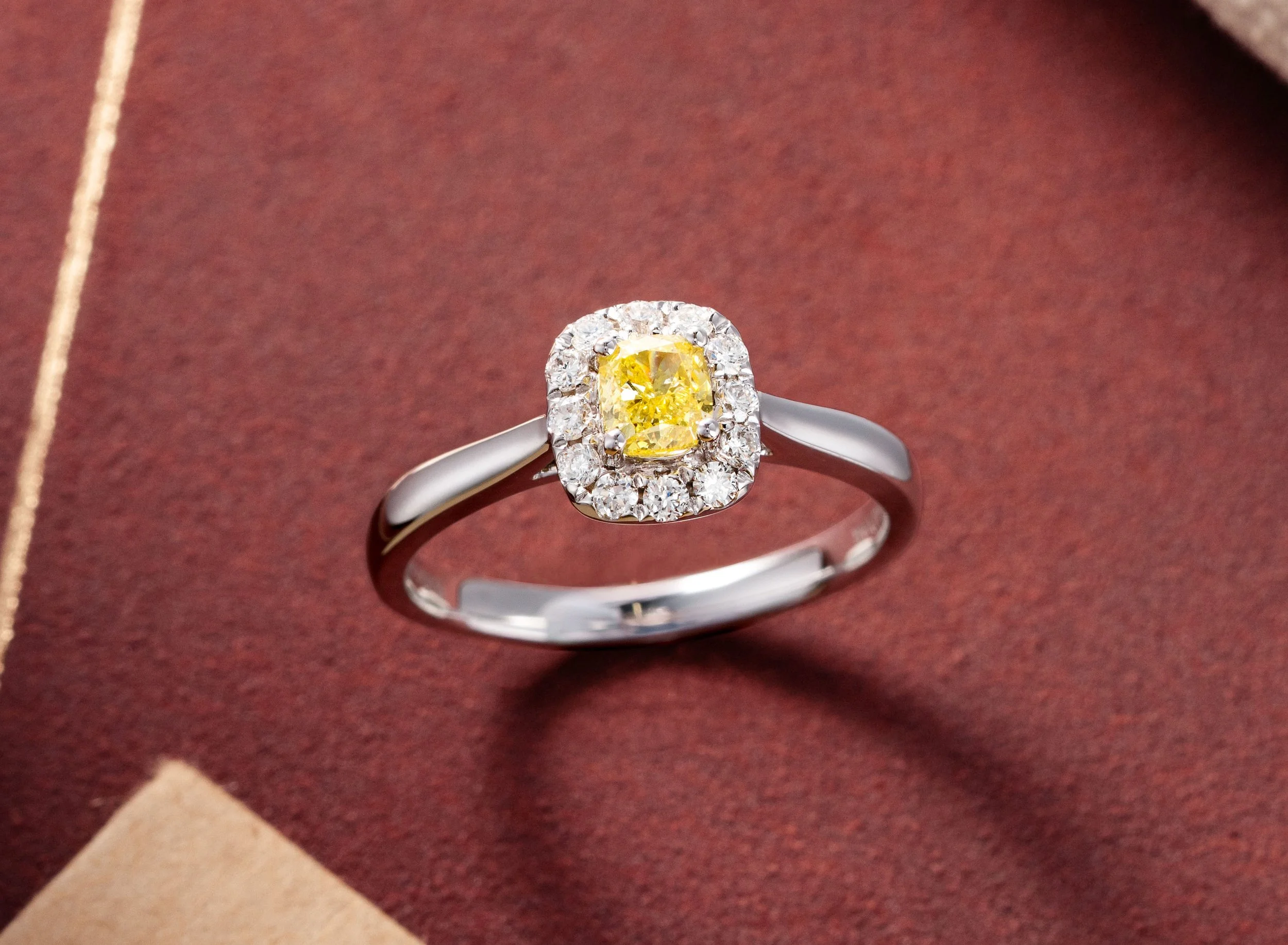
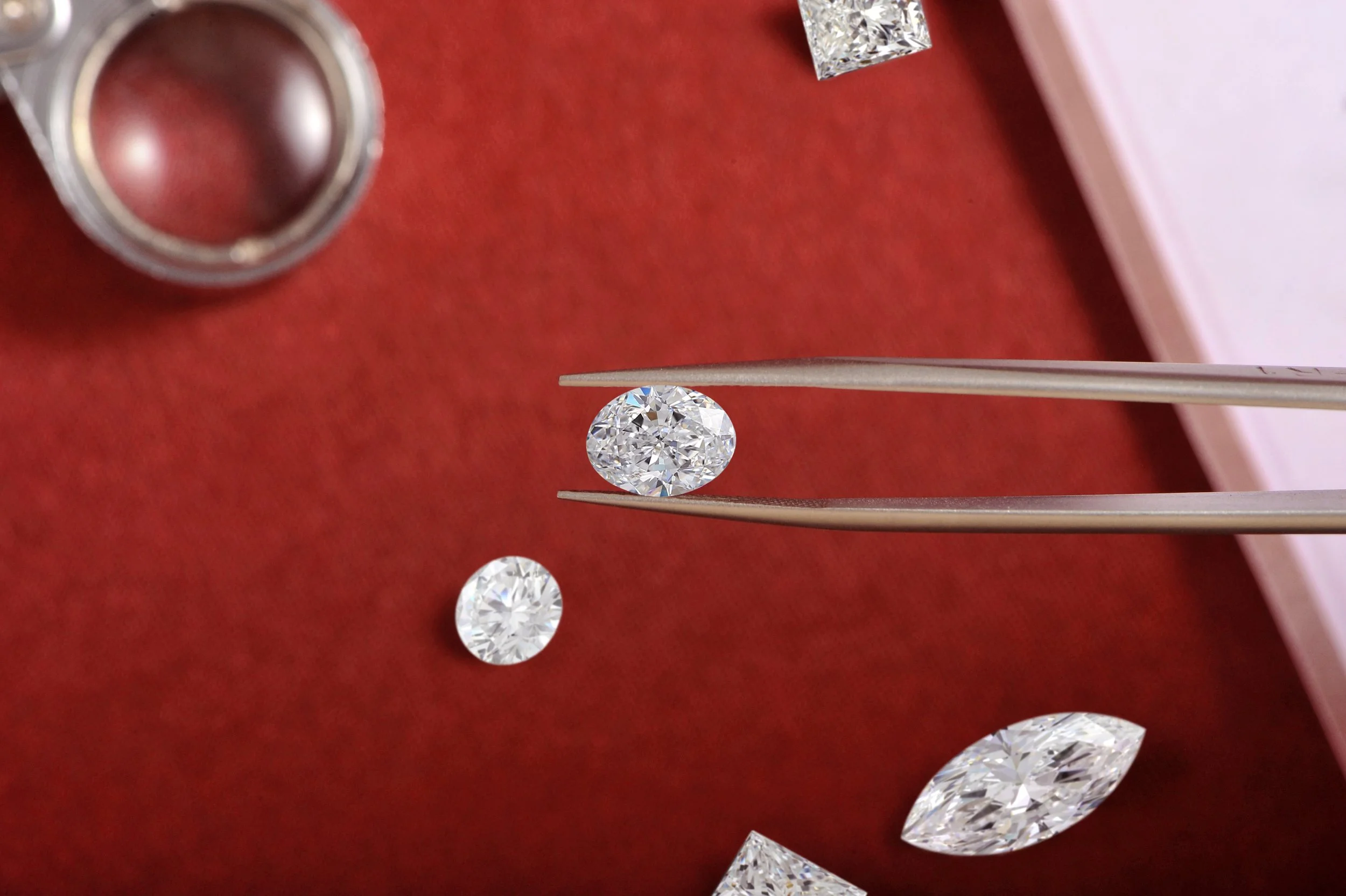
For those unfamiliar, EverDear creates lab-grown diamonds from the carbon found in human hair, cremation ashes, or pet fur. The process recreates the extreme heat and pressure found deep within the Earth in a controlled lab environment, and turns that carbon into a diamond.
Each diamond holds carbon that came from the people or pets it was made from. It isn't a symbol or a replica of them.
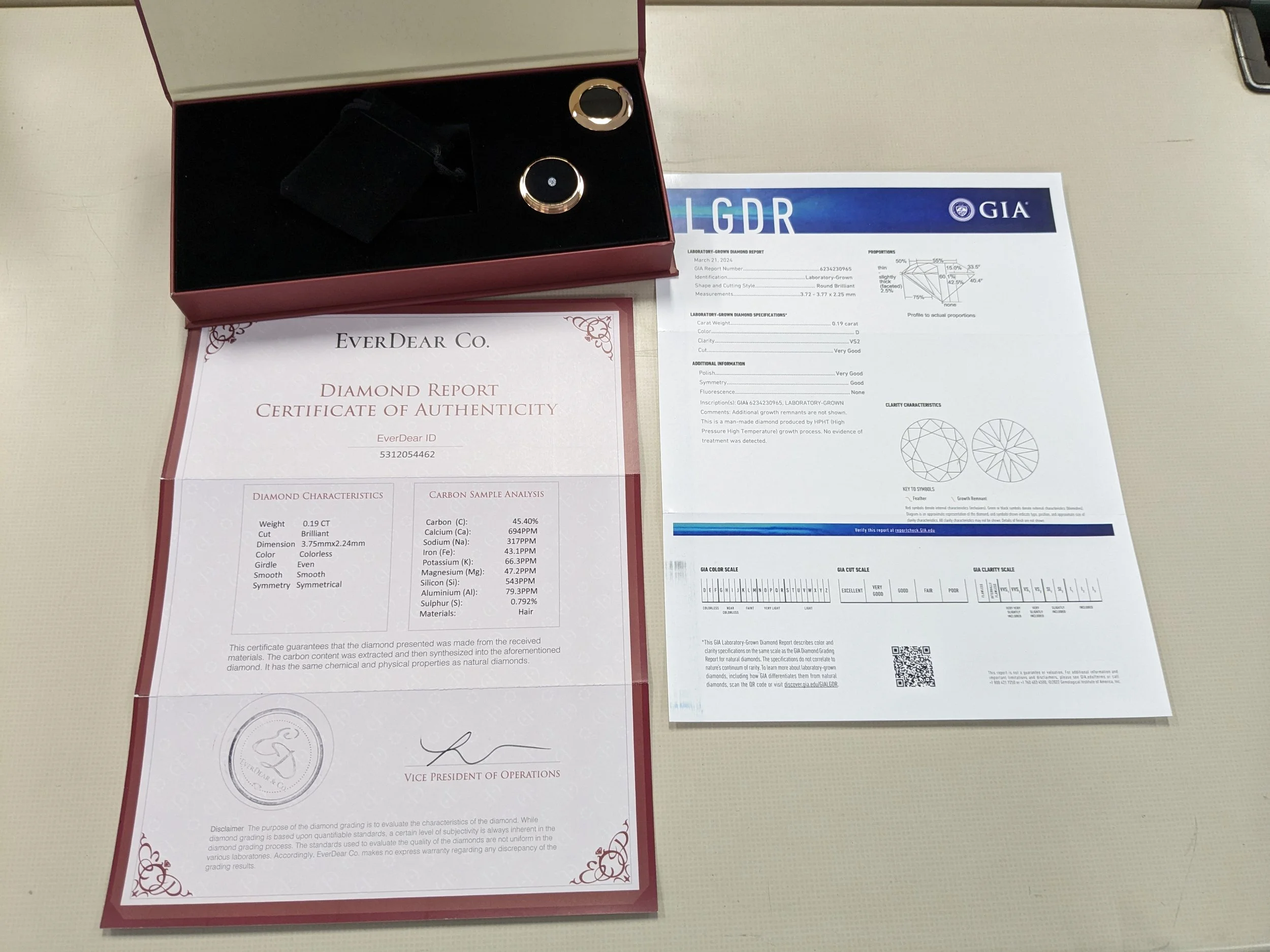
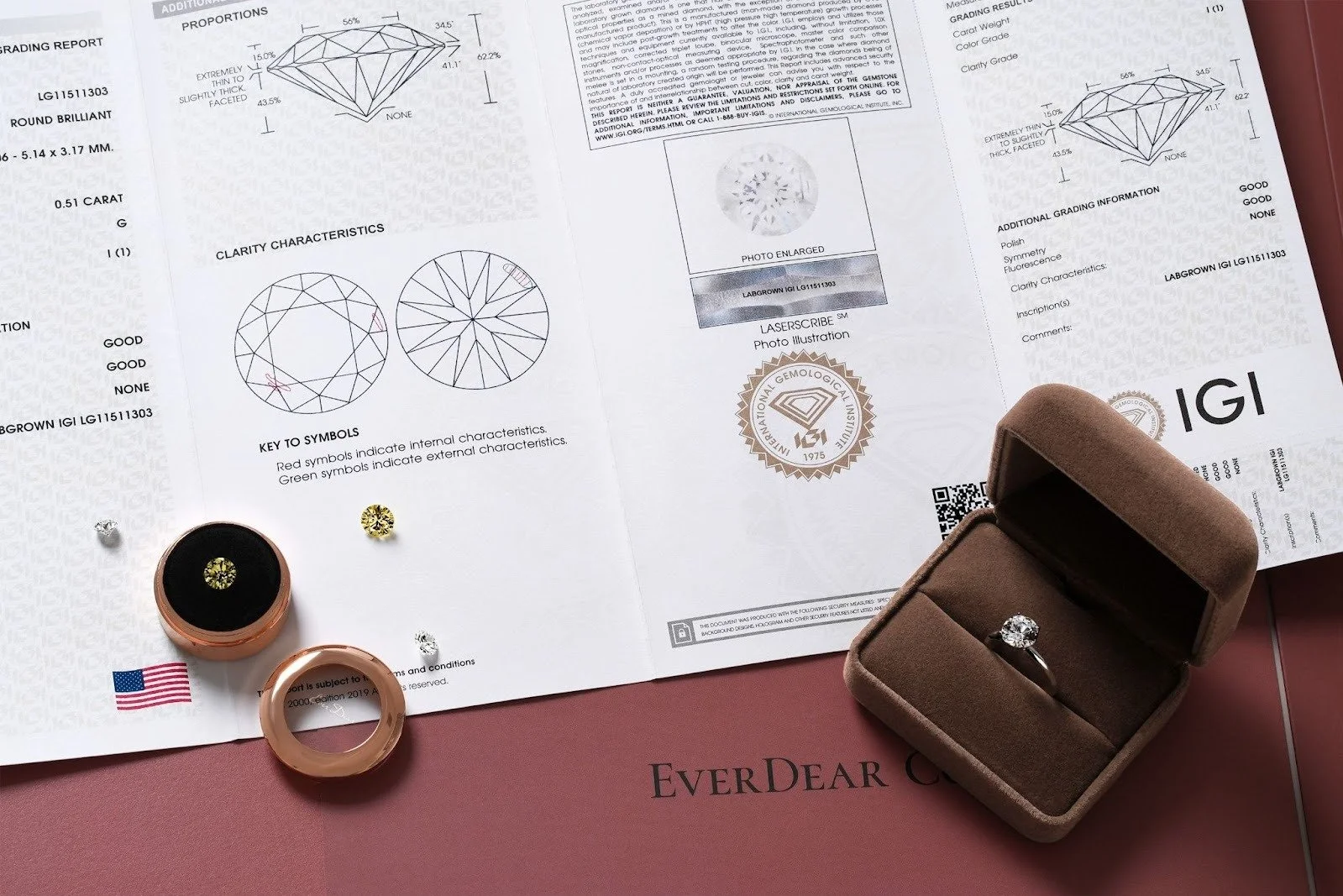
The EverDear in-house certificate and GIA certificate for Professor Mitsuhashi's memorial diamond
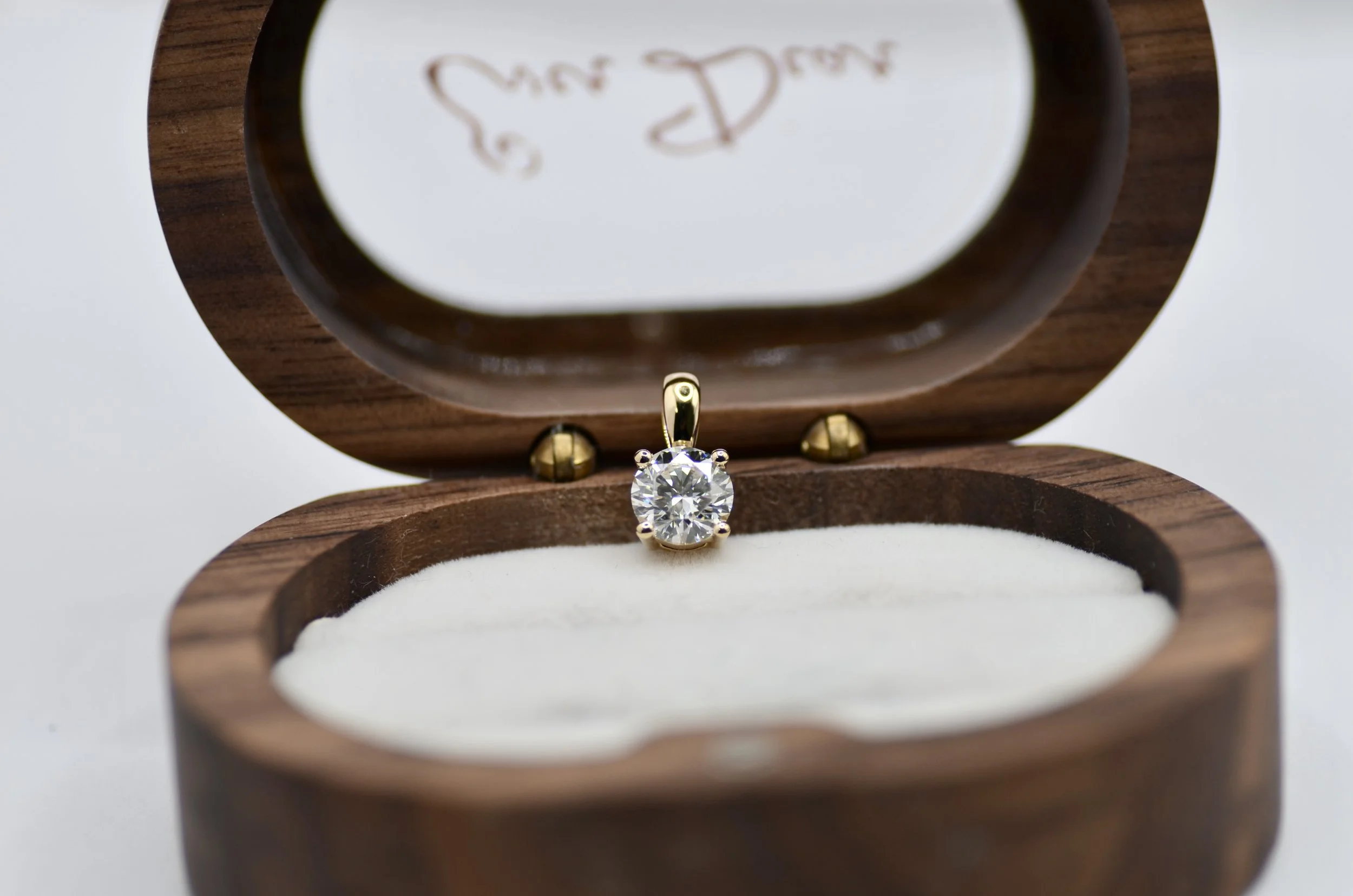
Professor Mitsuhashi chose to create his diamond from a combination of his family's hair and the fur of their Shiba Inu, Kirimaru. Only hair and fur went into it, with no ashes. The result was a 0.19-carat colorless diamond, brilliant cut, with VS2 clarity. It's small enough to fit inside a satellite the size of a Rubik's cube, but carrying within it the carbon of everyone he holds dear.
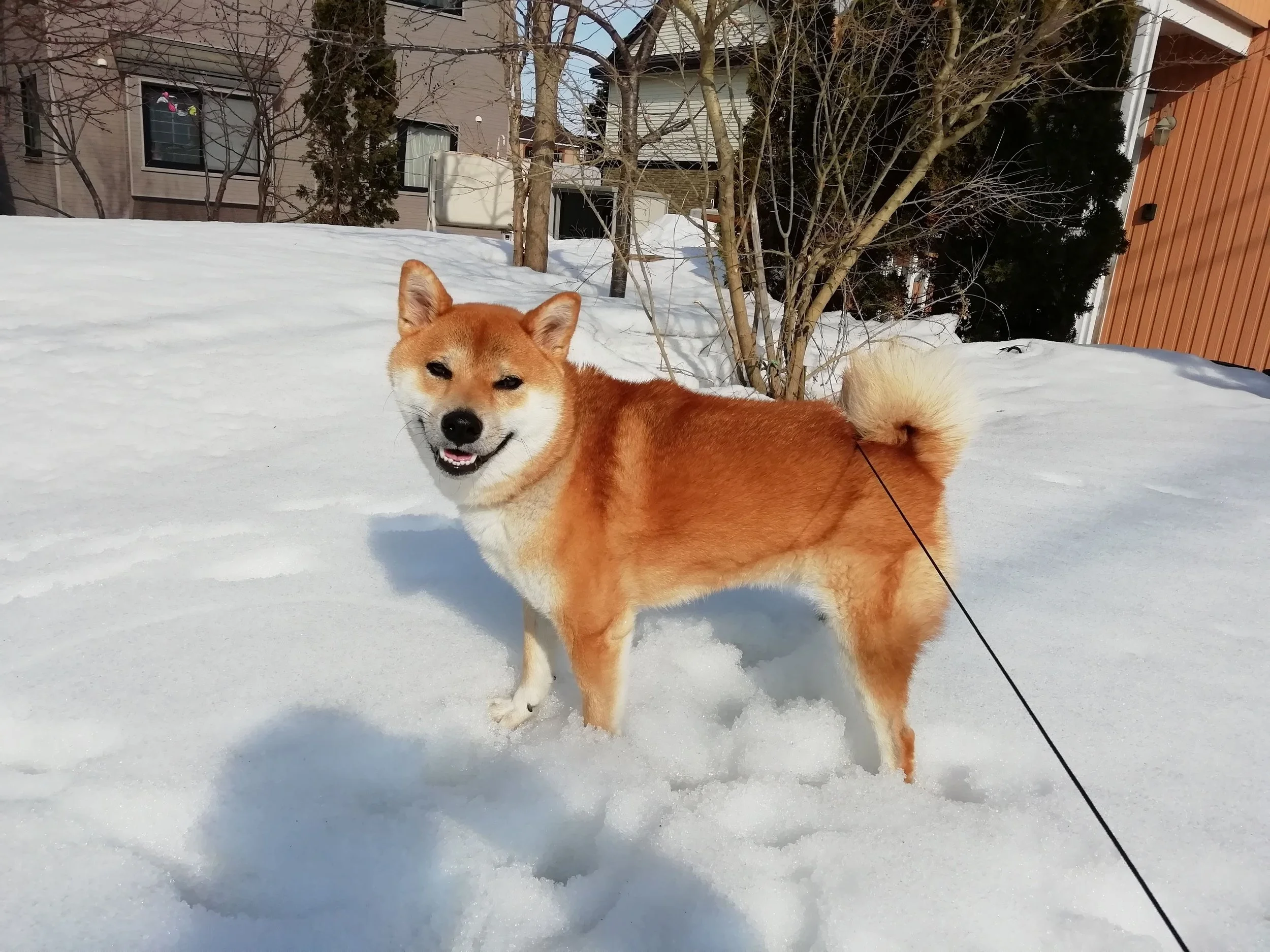
Kirimaru, whose fur became part of a diamond now orbiting Earth
The Satellite: HMU-SAT2 "Teruteru"
The diamond traveled to space aboard HMU-SAT2, a tiny satellite affectionately named "Teruteru."
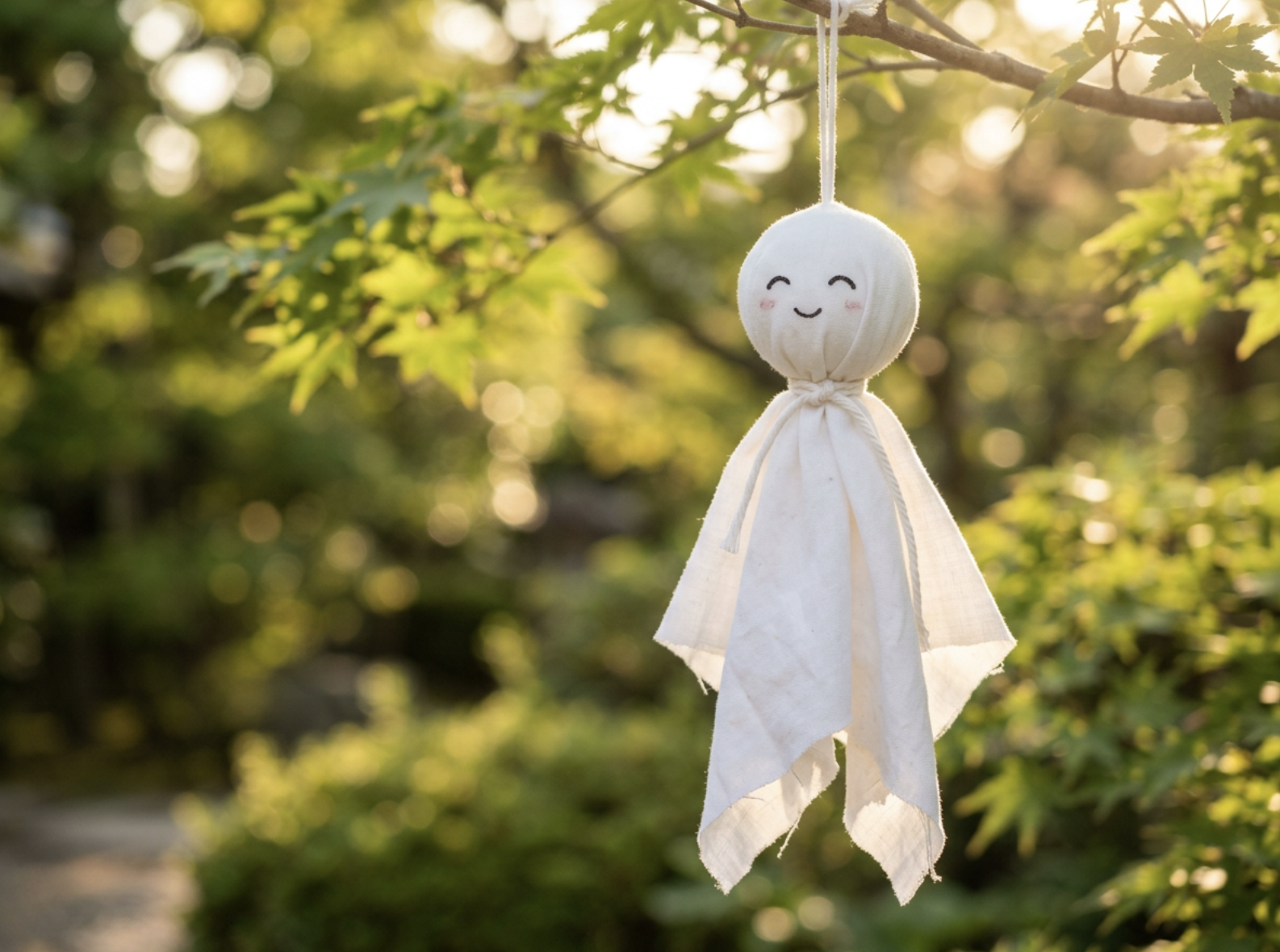
In Japanese tradition, teru teru bōzu are small handmade dolls hung by the window to wish for clear skies and good weather. The name "Teruteru" was chosen through a public contest suggested by a high school student in Nagano, and carries a double wish: that the satellite will tell its messages to Earth, and that those messages will shine (照る, teru) in the hearts of those who receive them.
Teruteru came together through the kind of collaboration that reminds you what people can do when they share a goal.
Students at a technical high school in Nagano Prefecture, which had been working toward building a satellite for about 16 years, assembled it with their own hands, with support from the adults around them. The project grew out of a wish to take space engineering beyond the classroom and let students build something that would actually fly.
A small factory in Nagano Prefecture used its precision machining skills to make the satellite's aluminum frame, and covered most of the project's costs.
Professor Mitsuhashi and his university students shared their aerospace expertise and mentored the team.
A graduate of Professor Mitsuhashi's seminar provided key technical support, acting as a bridge between the university and industry.
Professor Mitsuhashi coordinated with the organizations involved, from the launch on an H3 rocket at Tanegashima Space Center to the satellite's release into orbit from Kibo, the Japanese module on the ISS.
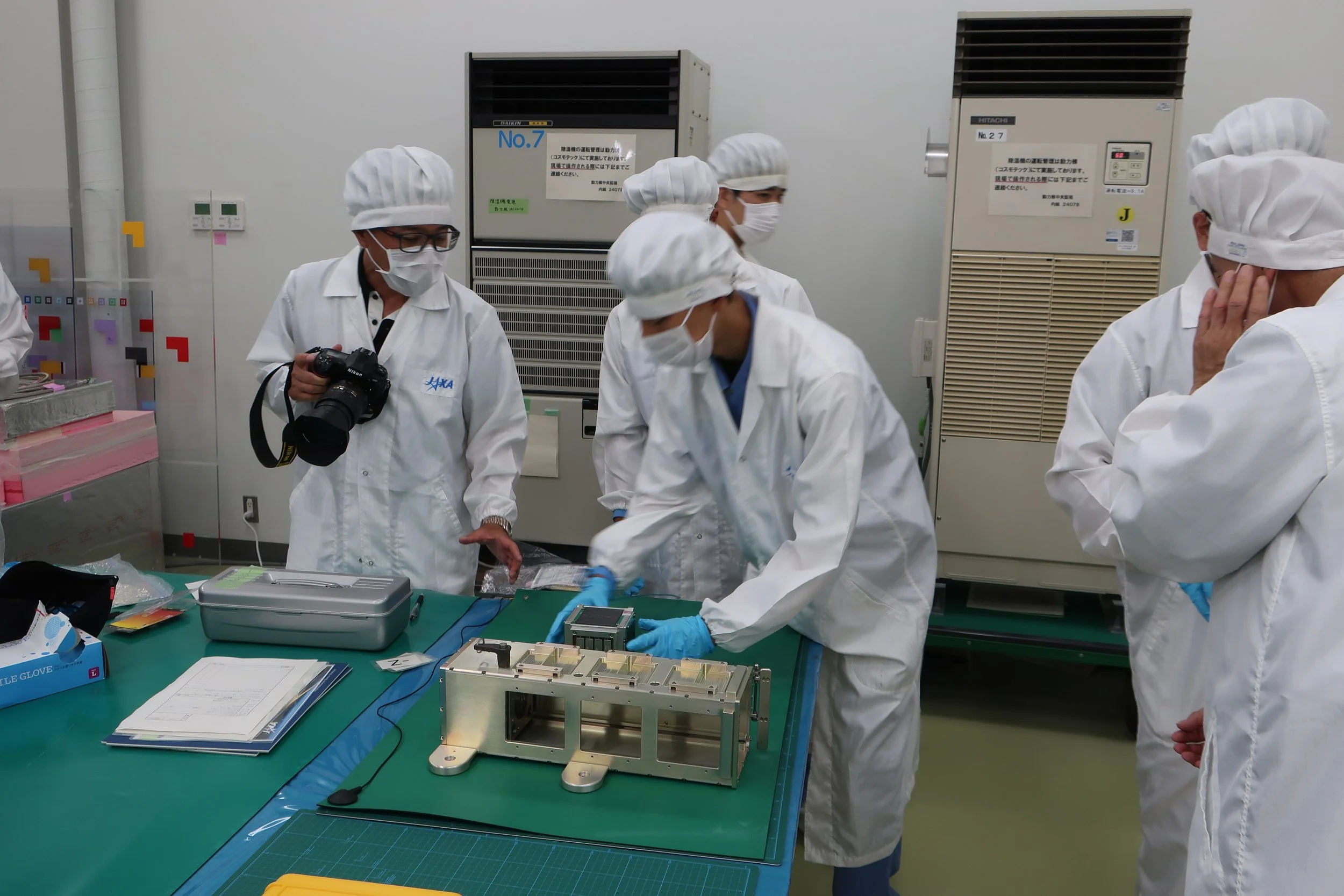
Loading the satellite into its carrying case
The satellite is a 1U CubeSat measuring only 100mm × 100mm × 113.5mm, weighing 1.28 kg, small enough to hold in your hands. But it carries an LED light experiment designed to send a visible "message of light" from orbit, and one very small diamond holding a very big dream.
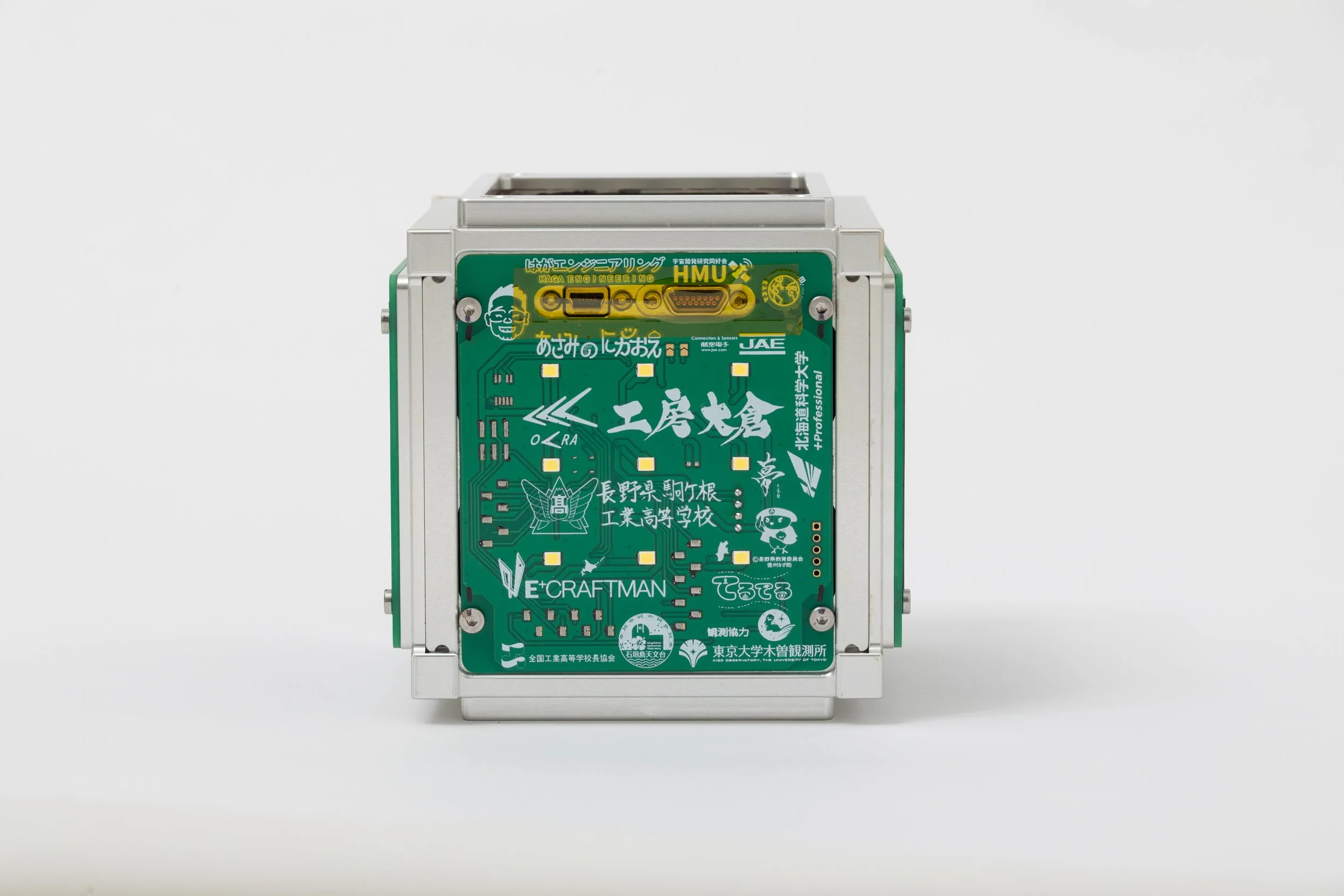
HMU-SAT2 "Teruteru", a 1U CubeSat small enough to hold in your hands, carrying a diamond and a dream
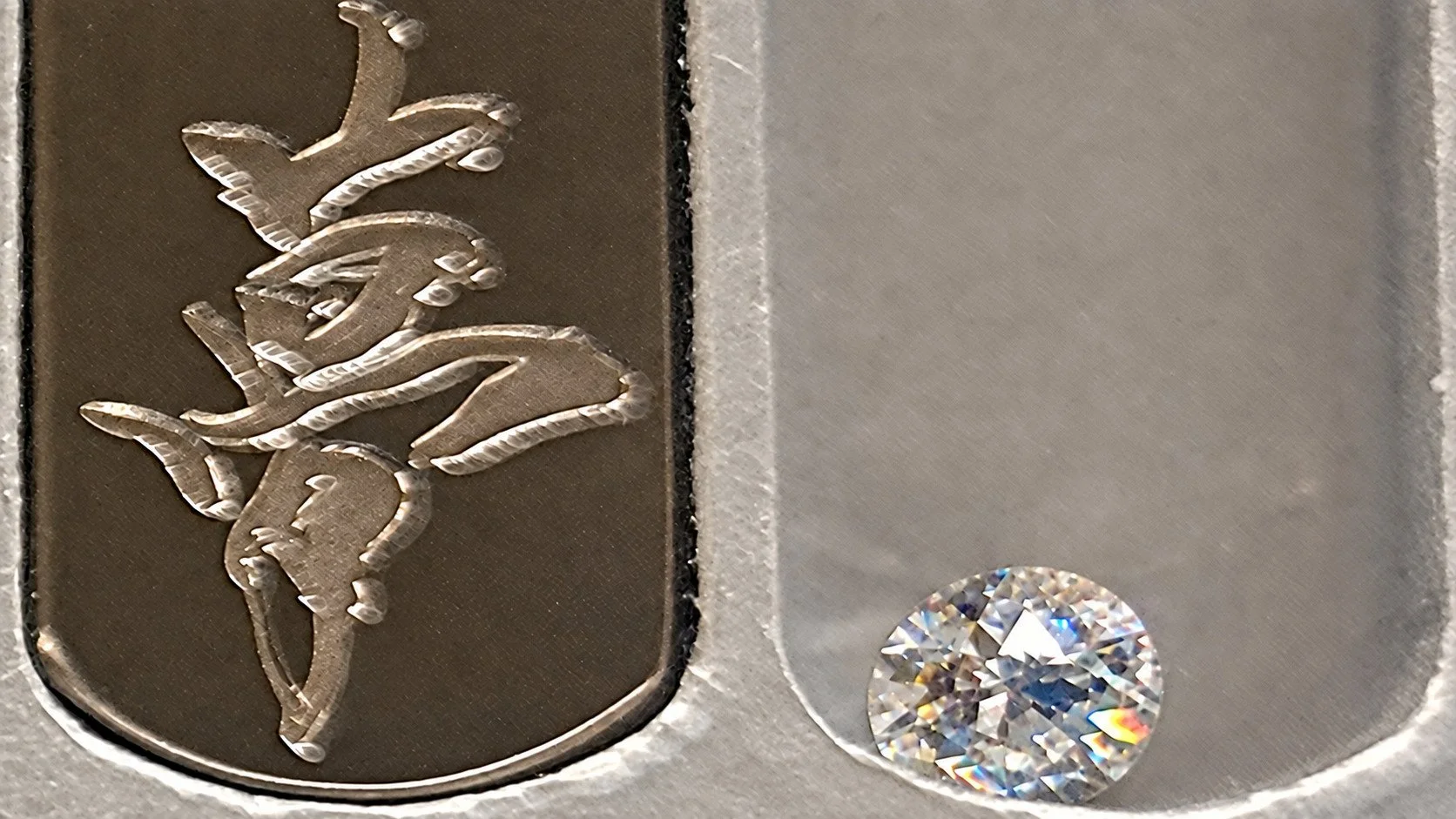
The diamond in its place inside Teruteru, next to a plate engraved with 夢, the Japanese word for "dream."
The project gained significant media attention in Japan. Hokkaido University of Science featured the collaboration on its website. On March 12, 2026, Fuji TV aired a national feature with the headline: "Behind the scenes of the latest rocket launch carrying the dreams of high school students.”
The Launch and Deployment
Teruteru's journey to the International Space Station began aboard JAXA's HTV-X1 resupply vehicle, launched on October 26, 2025, from Tanegashima Space Center in southern Japan via H3 Rocket No. 7. After arriving at the ISS, the satellite waited for its moment.
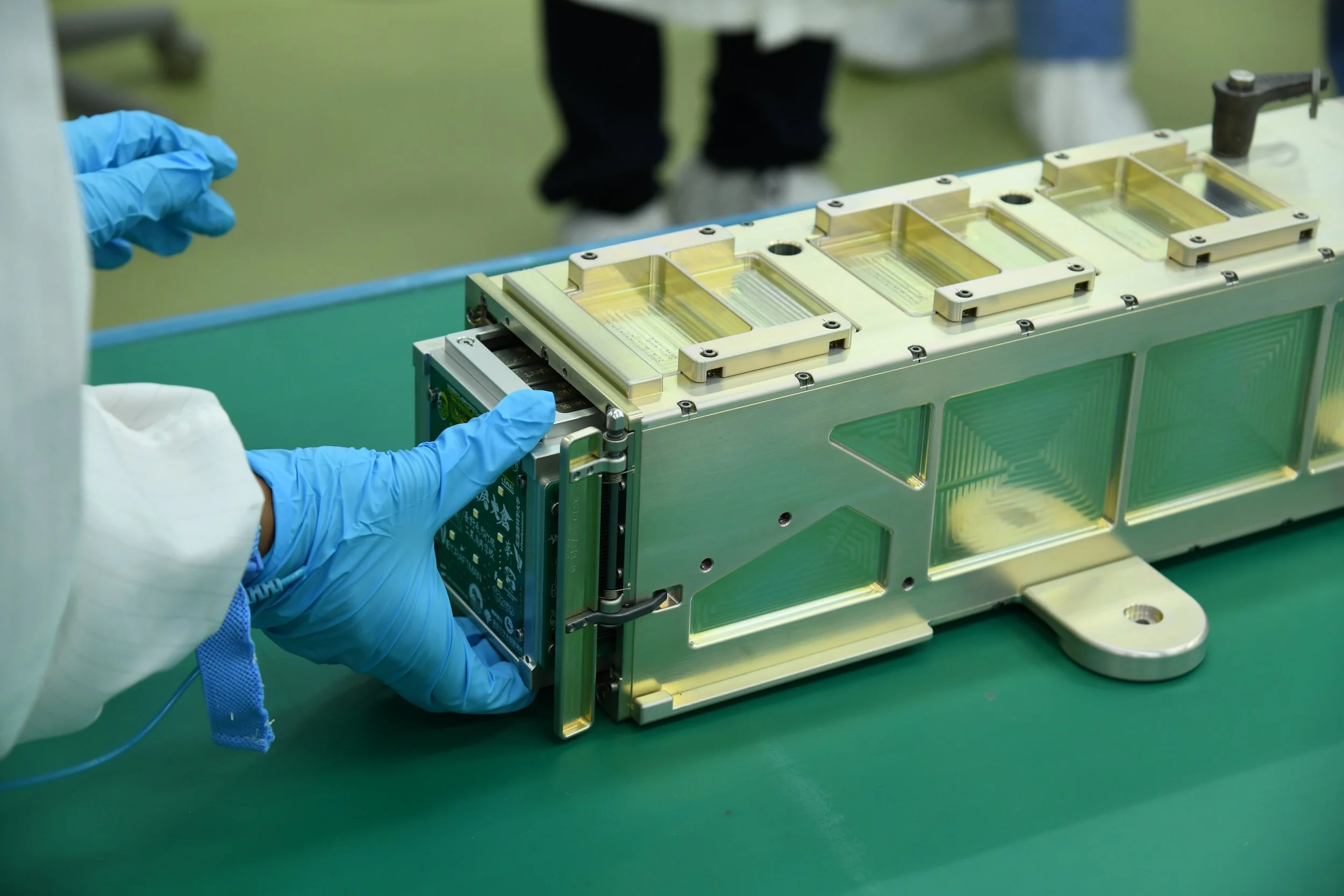
Teruteru sliding into its deployer case, the box that would later release it from the ISS
On February 3, 2026, the satellite was deployed from the ISS using JAXA's J-SSOD#35 (JEM Small Satellite Orbital Deployer), a system operated from the Japanese Experiment Module "Kibo" that gently releases CubeSats into orbit.
The deployment was streamed live on JAXA's YouTube channel.
The moment Teruteru was deployed from the ISS on February 3, 2026
Approximately 10 seconds after deployment, Teruteru's LED activated, a brief, bright pulse of light from a tiny satellite carrying a diamond made from love. The LEDs carry 82 messages, including senryū poems, transmitted in Morse code.
In that moment, something believed to be a world first was achieved: a memorial diamond created from human hair and pet fur, deployed into Earth's orbit from the International Space Station.
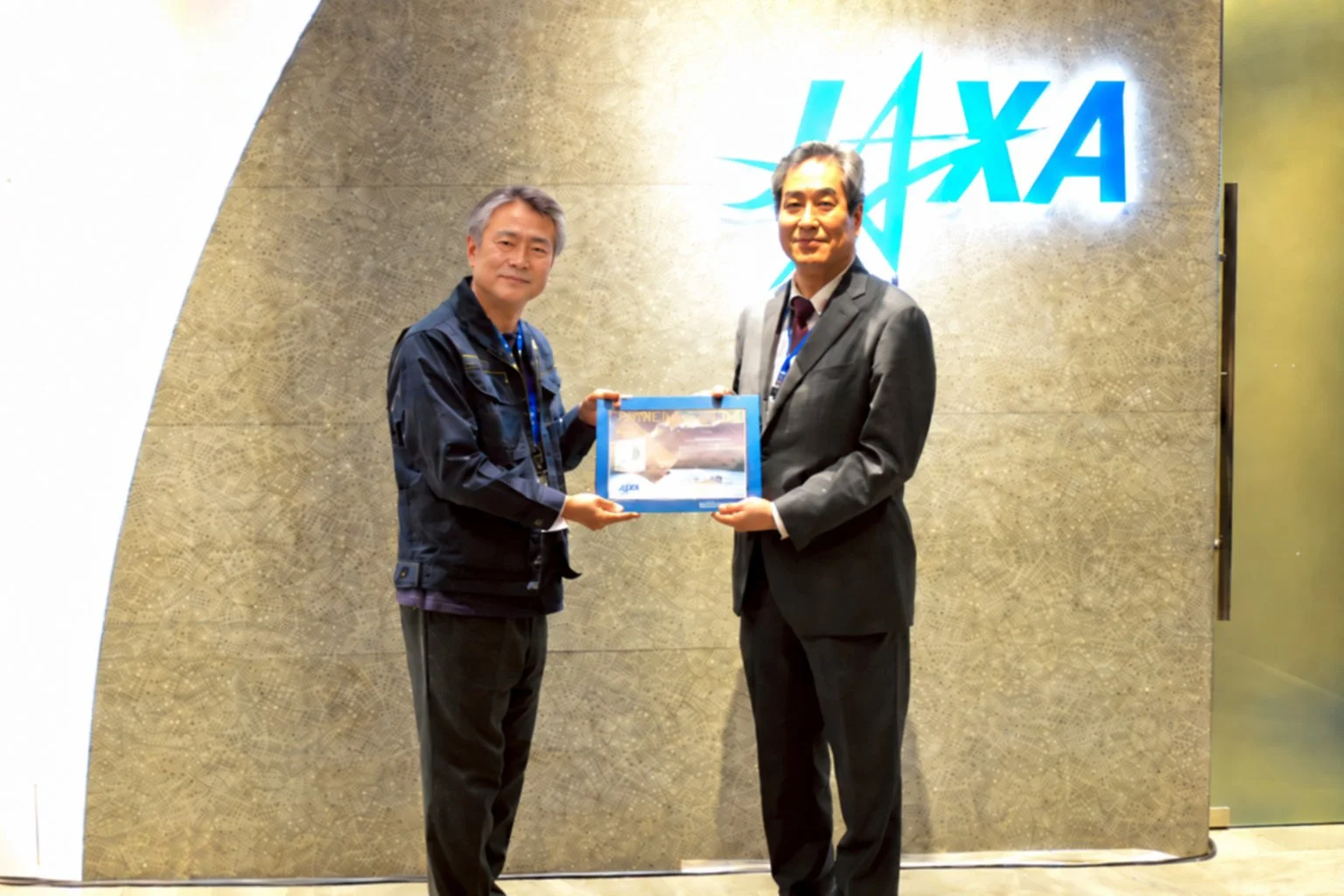
Professor Mitsuhashi, left, receiving his deployment certificate at JAXA’s Tsukuba Space Center.
Spotted from the Ground in Japan
Teruteru has also been seen from the ground. The observation team has been photographing it with Tomo-e Gozen, a camera with 84 image sensors mounted on the 105-centimeter Schmidt telescope at the University of Tokyo's Kiso Observatory in Nagano Prefecture.
Three satellites were released from the ISS on February 3, 2026, and NORAD has tracked their orbits ever since, updating the orbital data as it goes. The image below shows the trail of reflected sunlight left by the satellite the observation team believes is most likely HMU-SAT2 (Teruteru), photographed with Tomo-e Gozen at the University of Tokyo's Kiso Observatory.
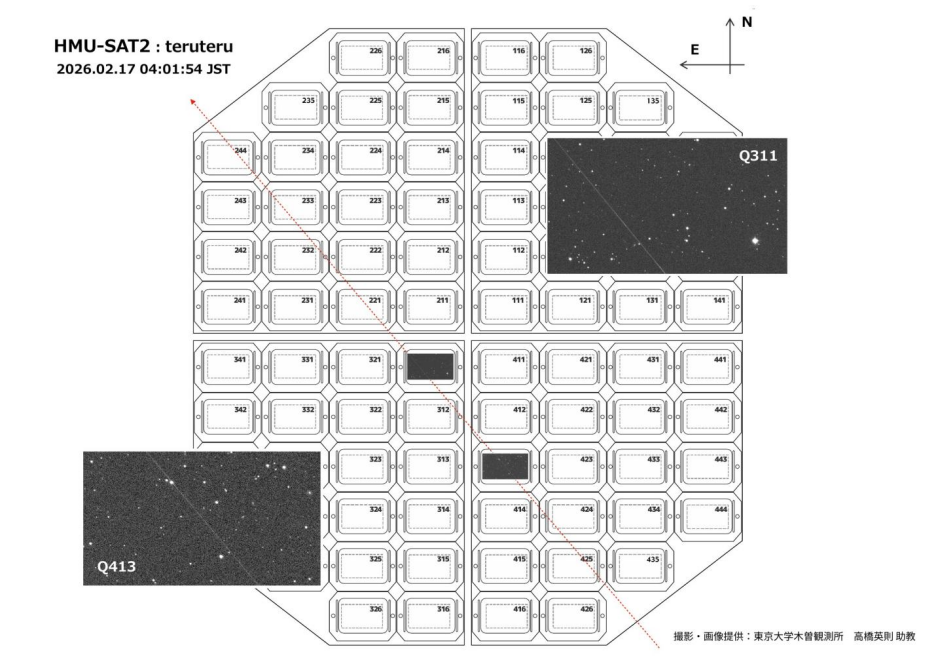
Taken in the early hours of February 17, 2026. Photo and image courtesy of Assistant Professor Hidenori Takahashi, Kiso Observatory, The University of Tokyo
In the photo, it shows up as a thin line of light crossing the stars. If the team is right, that line is the satellite carrying the diamond made from Professor Mitsuhashi's family's hair and Kirimaru's fur.
A Journey That Ends Like a Shooting Star
When Teruteru was released in February, it was flying about 420 kilometers above the Earth, close to the height of the ISS. With no engine to hold it up, the thin outer edge of the atmosphere has been slowing it down ever since. By the end of September, it had dropped to about 324 kilometers, and it's now coming down a little faster each week.
The latest prediction, based on tracking data from the end of September, puts its re-entry around December 6, 2026. The date can still move by a few weeks depending on things like solar activity, so it could come anywhere from mid-November to early January.
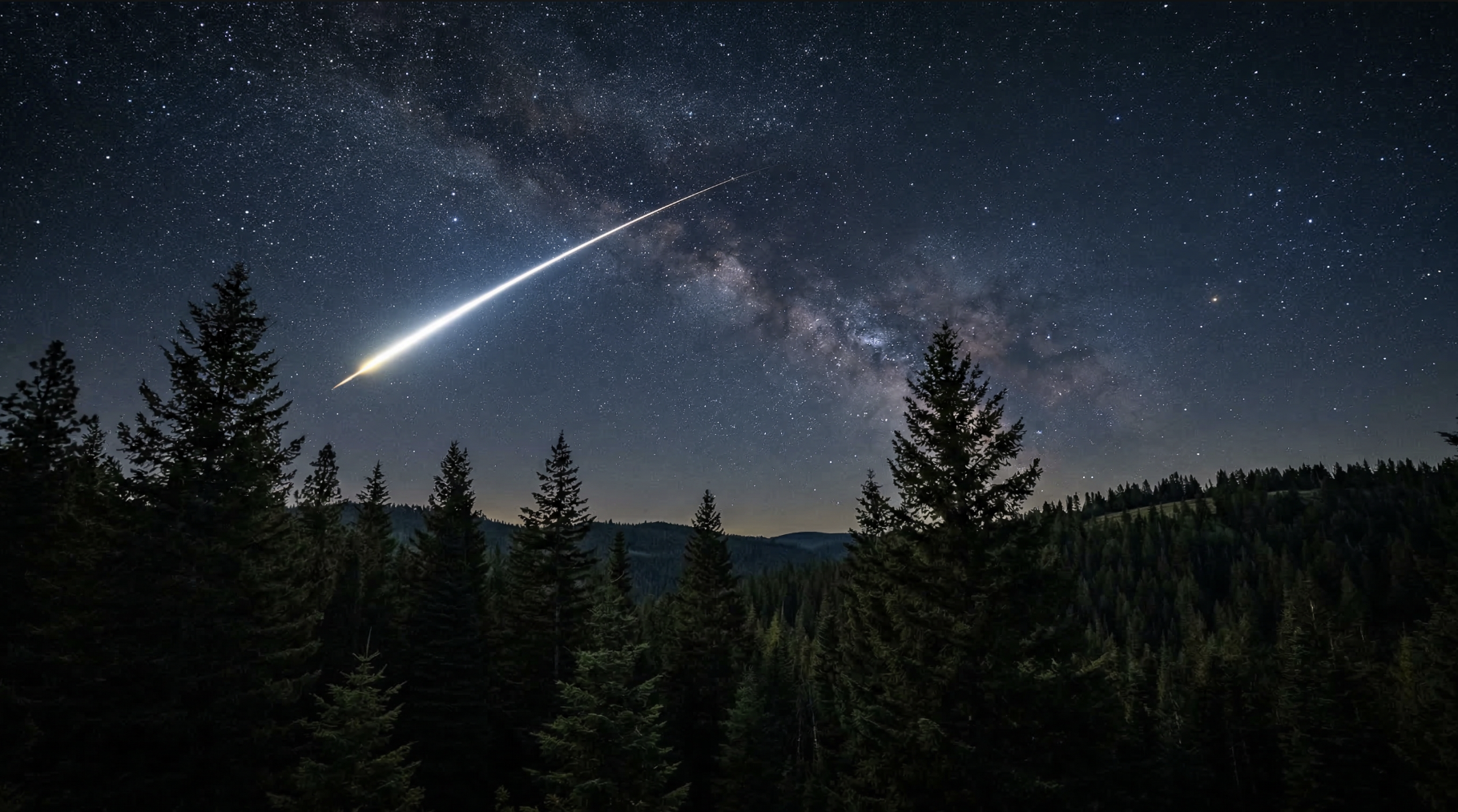
When it re-enters the atmosphere, it will heat up, break apart, and burn, finishing its journey as a shooting star, the way so many wishes begin.
Sending a diamond to space meant accepting that it wouldn't come back. The diamond would belong to orbit and eventually, to the atmosphere. Professor Mitsuhashi knew this was never about holding on. It was about letting go, letting his family travel somewhere extraordinary.
Looking Ahead
For Professor Mitsuhashi, the successful deployment of the diamond is not an ending. It's a proof of concept.
In the space field, demonstrated results carry weight. With this achievement, the Professor believes it is now fully possible to deploy satellites carrying lab-grown memorial diamonds from the ISS, reliably and without issue.
He also envisions a future that goes even further. Using the ISS external exposure platform, he believes it could one day be possible to send diamonds to space, let them spend months in the space environment, and then bring them back to Earth, returned to the hands of the people who love them.
We're not there yet. But what once sounded like a far-off dream now has a foundation built on real engineering, years of collaboration, and a diamond that has spent most of a year in orbit.
About This Story
EverDear is honored to have been part of this journey. We are grateful to Professor Ryuichi Mitsuhashi for his vision, his persistence, and his trust in us to create the diamond that would carry his family to the stars.
We are equally grateful to everyone who made the Teruteru satellite project possible: the students, teachers, engineers, and craftspeople who poured their time and talent into building something extraordinary and sending it to space.
EverDear creates memorial diamonds from hair, ashes, and fur. Each one is a diamond grown from the carbon of someone you love. Learn more about our process.